The Many Selves We Inhabit: Identity Foreclosure, Fragmentation, and the Borrowed Self
Sometimes the search for authenticity can quietly turn into a pressure to secure, purify, or prove a finished self before you feel allowed to live with congruence, and that urgency can close inquiry before the fuller sequence of your experience has even been allowed to unfold.
What happens if, instead of asking whether you have fully “found” your self, you begin asking which parts of your experience you can genuinely stay in contact with right now without rushing to sort them into what belongs and what must be excluded?
Opening frame: when identity language becomes too certain
The statement, “in order to be adaptive or congruent, you have to have a self to begin with,” contains a useful developmental intuition—one the is largely biased by past conditioning—but clinically it becomes risky when treated as a fixed truth rather than a reflective prompt. At its strongest, the phrase is trying to name the importance of continuity, self-observation, and enough reflective ownership to notice what one feels, values, and endorses.
But at its weakest, it implies that “the self” is a finished object one must first secure, purify, or recover before adaptive living is possible.
That shift matters because identity is rarely a sealed essence waiting to be uncovered. More often, it is an ongoing organization of meanings, role expectations, embodied predictions, social reinforcements, and self-appraisals built through repeated interaction with other people and environments. Developmental identity research increasingly treats identity as formed through person-context exchange rather than discovered as a hidden core. (PMC)
Clinically, that means the problem is not self-language itself. The problem is narrative closure. Terms such as “true self,” “higher self,” or even “real self” can become risky when they compress mixed experience into a preferred or ‘gated’ explanatory story. Under load, that kind of language can bypass body-level cues, unresolved affect, contradictory relational data, and the still-active contingencies of belonging that help organize experience.
Clinical risk: Trauma-related work on selfhood shows that trauma is often associated with altered self-processing, punitive self-beliefs, dissociation, and disturbances in continuity of self-experience, which makes premature certainty especially tempting. (PMC)
Humility and Generative Identity Associations
A clinically clean stance is that recognizing disliked, limited, or under-developed parts of the self can be deeply adaptive when it increases differentiation, reality testing, and choice, rather than collapsing the person into a fixed deficit story. The task is not to moralize those parts or treat them as proof of a purely lesser self, but to notice them as real features of present organization that may carry constraint, cost, or immaturity while still remaining workable, revisable, and held within flexible boundaries of self-regard.
Where am I vulnerably holding my present capacity, and where do I allow space to adapt and evolve ion a generative manner?
It is adaptive to discern painful, limited, or under-developed aspects of the self when that discernment supports clearer reality testing and more flexible response, rather than turning those features into a moral verdict, a foreclosed identity, or a rigid demand for self-correction.
The central clinical concern: identity foreclosure as defensive closure
A clinically cleaner way to state the concern is this: identity foreclosure occurs when commitment outruns exploration, and the person settles into a stabilized story before enough contradictory data has been held.
In this context, foreclosure does not only mean a developmental milestone. It also names the adult tendency to organize instability through compressed identity claims such as “this is my real self,” “that part is not really me,” or “I’m finally no longer living from survival.”
Yet survival is our basic urge to sustain our existence.
Those statements may feel clarifying, but they often carry an implicit hierarchy: one state is framed as pure, legitimate, and essential, while another is framed as reactive, contaminated, or less real. Identity research and contemporary developmental-social models suggest that identity is not best understood as a fixed inner possession, but as an ongoing process shaped by personal, relational, and group-level influences. (PMC)
That matters because foreclosure often reduces dissonance—or discomfort—by simplifying complexity too early. Fear and longing, competence and burden, protest and shame, closeness and alarm may all be active at once. Yet when those tensions are hard to hold, the system may recruit a more coherent identity story to regulate ambiguity. The relief is real, but the cost is differentiation. What could have become reflective sequencing instead becomes self-sealing containment.
Why this matters clinically: fragmentation is not falseness
One of the most important corrections here is that trauma-shaped or stress-shaped organization is not unreal. A person is not usually divided into one pure, adaptive core and one fake, defensive shell. More often, the person is organized by multiple context-sensitive states, roles, habits, and relational predictions that may conflict with one another.
A protective adaptation is still part of the person.
A more spacious, chosen, reflective state is also part of the person. The issue is not which state is “actually you.” The issue is what conditions recruit each state, what each one protects, and how rigidly selfhood has become fused to them.
This is why binary language is so clinically costly. When adaptation is framed as “never the real you,” the person may begin moralizing their own coping. What once functioned as context-shaped intelligence becomes recast as evidence of falseness. Trauma literature increasingly emphasizes disruptions in self-organization, continuity, and self-concept rather than a simple false-self/true-self split, and research also links adverse childhood experiences with lower mentalization and higher dissociation, both of which narrow reflective range under stress. (PMC)
Sample analysis: where the rhetoric is useful and where it overreaches
Sample 1: “Your personality is not a personality problem”
This passage usefully challenges trait essentialism. It points toward a clinically important reality: qualities like independence, drivenness, emotional restraint, or low expressed need may sometimes reflect organized adaptation rather than stable temperament alone. That is a meaningful correction, because repeated responses to difficult environments can become identity-level habits. (Sciencedirect)
Overview: Psychological essentialism in childern
Is it in the world (metaphysical essentialism) or in human representations (representational essentialism)? The former is a philosophical position concerning objective reality; the latter addresses how people construe reality (in their belief systems, language, and cultural practices). Essentialism faces difficulties as a characterization of the natural world. Social categories, such as race and caste, have no true underlying essence. Biological species also are without an essence because they evolve and are population-based rather than reflecting properties inherent in each individual. Furthermore, whereas essentialism implies that there is a single appropriate classification for each organism, there might in fact be numerous valid classifications. The essentialist view therefore seems to be a human construction rather than a perceived reality.
How essentialist thinking can collapse complexity into certainty
Where the passage becomes more precarious is in its movement from possibility to certainty. Phrases such as “those weren’t traits you were born with” and “they were decisions your nervous system made” imply a causal precision that the surface presentation alone cannot support. Independence, achievement, or emotional reserve can emerge through many pathways, including temperament, family modeling, role reinforcement, culture, attachment, current stress ecology, and trauma-shaped learning. A clinically cleaner formulation would say these traits may partly include protective learning, rather than declaring that they definitively do.
The most clinically risky line is the question, “Which parts of you are actually yours?” That phrase introduces an unnecessary divide between internalized and social selfhood. Adaptive traits that arose under pressure may still be deeply woven into a person’s identity, values, competence, and meaning-making. The problem is not that they exist. The problem is when they remain rigid, compulsory, shame-backed, or fused to punitive worth.
Sample 2: “The organized self” versus “the true self”
This passage is rhetorically powerful, but clinically more polarizing. Its strongest insight is that survival strategies can become overgeneralized and continue operating after the original context changes. That is real, and many people do experience older protective configurations as automatic and costly in present-day relational life.
The risk lies in the explicit two-self model. “The organized self is who you built to survive” and “the true self is who went underground” creates a splitting structure—exiled, dejected. It implies that adaptation is an ‘impostor identity’ and that a purer, buried essence remains hidden underneath.
Maybe you’ve found yourselves there? I know I have.
While this may feel liberating for some readers, it can also intensify shame toward coping, invite idealization of an untouched inner self, and promote confabulated certainty. The line between equating anxiety with the gap between built self and true self is also too totalizing. Anxiety emerges through many pathways, and reducing it to one identity split over-compresses mechanism.
The borrowed self: how much of us is socially shaped?
A great deal of who and what we are is borrowed, but borrowed does not mean false.
It means co-authored. Humans borrow language for naming internal life, roles for organizing social behavior, standards for deciding what counts as acceptable, and relational expectations for predicting how closeness, dependency, difference, and vulnerability will be received.
Imagine the complete and utter potential for chaos if we did not share common values, goals, meaning, morals, beliefs—etc. It may not be all that hard to imagine as we see examples of it from lived moment to lived moment.
Belonging is not produced in isolation. It is dynamically shaped by social context, mutual recognition, group membership, and relational feedback. Contemporary belonging research treats belonging as relational, contextual, and multidimensional rather than as a private possession of the isolated individual. (PMC)
That has two major implications.
- First, the “social self” is not merely a contaminant or compromise. Social and cultural shaping are part of how selves form.
- Second, the search for a self outside influence can become its own form of flattening. Its own form of escape. Its own form of relief from uncertainty.
The goal is not to purge everything borrowed and uncover a socially untouched core. The goal is to notice which inherited roles, meanings, and expectations still feel endorsed and workable, and which ones operate as rigid defaults under pressure.
A relational-developmental perspective fits this more cleanly than a purity model. Identity formation is increasingly understood as a process that emerges through mutual shaping between person and context. Social identity and social integration research also shows that who we take ourselves to be is linked to group processes, belonging, and relational positioning, not only to inward self-description. (PMC)
Pre-conventional filtering, compartmentalization, and self-sealing containment
When development remains strongly organized around approval, shame, punishment, usefulness, or threat of exclusion, experience is more likely to be sorted into “acceptable” and “unacceptable” forms before it can be reflected on symbolically. That is where pre-conventional filtering becomes clinically relevant. Certain states become harder to own not because they are unreal, but because they threaten the person’s present arrangement for staying coherent, needed, moral, or coherent enough to remain in contact.
👉This can lead to compartmentalization. One state is idealized. Another is buried. One role is treated as the rightful self. Another is treated as evidence of damage, weakness, or contamination.
Over time, this can become self-sealing containment: identity itself becomes the mechanism that protects against further inquiry. The person says, in effect, “because this role works, because it is valued, because it is who I am, there is no deeper question here.”
End of story.
Yet the adaptation may still be carrying urgency, fatigue, fear, or worth dependence.
Research linking trauma with negative self-concept, dissociation, and reduced reflective functioning supports the broader mechanism. Trauma exposure is associated with more negative self-concept in youth, while ACE-related work suggests lower mentalization and higher dissociation often travel together. That matters because reduced reflective range makes it easier to turn a lived process into a rigid identity verdict. (PMC)
A RAD-F synthesis
Clinical tool: The RAD-F scale is a clinical sequencing lens (approximation) that helps track how a person’s experience is being organized across four interacting domains—relational contact, perceived autonomic state, felt dissonance, and the reinforcing dynamics of the surrounding relational field.
It matters because it helps pace intervention more precisely by showing whether a pattern is being driven primarily by attachment pressure, body-level overload, conflicting meanings, or relational reinforcement, allowing the clinician to sequence and pace contact, regulation, and inquiry without collapsing complexity too quickly.
In the case of the identity foreclosure model here:
R — Relational contact
These identity claims often emerge in a relational field problem: how do I remain accepted, validated, coherent, and legible when my experience is mixed? A stabilized identity may protect attachment, social fit, or professional functioning, but it can also reduce access to contradictory truths.
“Am I being seen, heard, held, and understood?”
A — Autonomic patterning
Under ambiguity, the nervous system often prefers coherence over complexity. Identity certainty can regulate uncertainty, shame, grief, helplessness, or overload. Interoception and stress science support the idea that internal state sensing and stress regulation are deeply linked. (PMC)
“Yet, interoception and regulation alone do not automatically equate to reintegration or unresolved data”
Interoceptive awareness and improved regulation may increase access to unresolved material, but access and stabilization are not identical to reintegration; unresolved data is better considered integrated when the person shows broader shifts in self-organization, relational flexibility, and cue-linked patterning, not regulation alone. (PMC)
D — Dissonance
Many valued traits are both meaningful and compensatory. A person can be genuinely caring and over-functioning. Competent and over-bound to worth through usefulness. Insightful and defended through abstraction. Dissonance grows when the same trait serves both value and protection.
F — Field feedback loop
The field often rewards what protects. The helpful child becomes the dependable adult. The hyper-attuned partner becomes the emotional manager. The insightful clinician becomes the one who can track everyone but struggles to remain with personal need.
Reinforcement and automacy—the quality, state, or condition of being automatic—stabilizes the adaptation, making it harder to distinguish flexible strength from compulsive identity performance.
In short—the adaptive neural imprint of repeated habitual change.
Clinically clean listicle: main risks of “true self” and “higher self” framing
- False binaries The person gets split into authentic versus defensive, pure versus contaminated, awakened versus reactive.
- Confabulated certainty A resonant story starts to feel like established causality, even when multiple mechanisms remain plausible.
- Moralizing adaptation Coping is recast as evidence of falseness rather than context-shaped intelligence.
- Loss of differential thinking Temperament, trauma, reinforcement history, culture, burnout, attachment, and habit all get collapsed into one origin story.
- Bypassing integration The person may disown adaptive parts rather than differentiate, revise, and integrate them.
- Identity foreclosure A coherent self-story is stabilized before enough contradictory data has been explored.
Clinically clean listicle: what to use instead
Instead of saying:
- “That was never the real you.”
- “Your true self went underground.”
- “Your higher self knows better.”
Use language such as:
- “This may be a well-learned protective pattern.”
- “This response may have made sense in an earlier context.”
- “Part of you seems organized around protection, while another part wants something different now.”
- “The question is less who is real and more which pattern is active, what it protects, and whether it still fits the present context.”
That language reduces ontological splitting and preserves inquiry.
Survival adaptation versus integrated strength
One of the strongest sections in our source material is the following prompt, because it moves away from purity language and toward discernment.
How can one make the distinction between their skill set being survival dependent to being strength oriented? That rather than rooted in their trauma and adaptation around, it is a strength that is purposeful; an expression of their why.
The better question is not whether a skill came from trauma or from purpose. The better question is how freely the skill can be held now.
At its center, the question is asking how to distinguish capacity that was forged under pressure from identity that is still being organized by pressure.
In other words: when does a skill remain mainly a survival-shaped adaptation, and when has it become a chosen strength that can be used with flexibility, proportion, and freedom?
That distinction matters because trauma-related patterns are often maintained less by the skill itself than by the neurally imprinted defaults, appraisals, bodily states, and contingencies of belonging that stay attached to it.
Trauma research consistently finds that ongoing post-traumatic distress is strongly associated with maladaptive appraisals and altered self-processing, not just with the original event. (PubMed)
A skill is more likely still survival-laden when it is:
- rigid
- urgency-linked
- fused to worth
- costly to withhold
- guilt-producing when set down
- organized around fear of collapse, rejection, or uselessness
A skill is more likely functioning as integrated strength when it is:
- available but not compulsory
- context-sensitive
- proportionate
- not the sole condition for belonging or self-coherence
- usable with choice
- set-down-able without identity collapse
This distinction fits trauma models that emphasize appraisal, self-processing, regulation, and context rather than simplistic trait labels. (PMC)
The deeper correction: authenticity is not purity
A unitive developmental lens suggests that authenticity is not the recovery of a self outside culture, role, adaptation, or belonging. It is the growth of enough reflective capacity to notice how all of those forces are shaping the present moment, and enough freedom to participate in that shaping with greater ownership and choice.
That is a very different project from self-purification. It does not ask, “Which part is really me?” It asks:
- Which pattern is active right now?
- What conditions recruited it?
- What does it protect, preserve, or prevent?
- What happens when it is not available?
- Does it still fit the present context?
- Can I stay in contact with both the cost and the intelligence of the adaptation without ranking one state as more human than another?
In Sum: That is the move from foreclosure toward integration.
Peer-reviewed evidence
Here are the main evidence streams that support the overall formulation:
1. Trauma and negative self-concept
A 2024 meta-analysis found a significant relationship between trauma exposure and negative self-concept in children and adolescents, supporting the idea that traumatic experience can shape how the self is organized and evaluated over time. This matters here because it supports the claim that selfhood is often altered by adversity, but not in a way that justifies flattening the person into a false-self/true-self binary. (PMC)
2. Trauma, selfhood, and altered self-processing
Lanius and colleagues’ review on the sense of self after trauma describes how trauma can affect self-referential processing, negative self-beliefs, embodiment, and continuity of self-experience. This matters because it supports the clinical caution that identity language can become too certain precisely where self-experience has already been destabilized. (PMC)
3. ACEs, mentalization, and dissociation
Research on adverse childhood experiences found associations with lower mentalization and higher dissociation. This matters because when reflective functioning narrows, people are more likely to confuse state with identity, sensation with interpretation, and temporary activation with enduring selfhood. (PMC)
4. Reflective functioning and dissociative experience
Emerging work on reflective functioning and dissociation suggests that lower reflective capacity is linked to greater dissociative symptoms. This matters because it strengthens the concern that under load, identity explanations may serve as containment rather than careful sequencing. (PMC)
5. Belonging as relational and contextual
A major integrative review on belonging argues that belonging is relational, contextual, and shaped by social conditions rather than being a purely internal possession. This matters because it supports your central thesis that selfhood is co-authored, and that belonging is mutual rather than an isolated individual achievement. (PMC)
6. Identity as person-context process
Contemporary identity theory increasingly frames identity as emerging through interaction between person and social context. This matters because it directly challenges the notion that authenticity requires locating a self outside influence. (PMC)
7. Social identity and integration
Meta-analytic work on social identity and social integration shows that identity formation and psychosocial functioning are tied to social positioning and group processes. This matters because it supports your point that much of the self is “borrowed” through shared membership, not simply invented privately. (PMC)
8. Interoception, stress, and embodied state organization
Reviews on interoception and stress, and on the broader science of interoception, support the idea that bodily state sensing, meaning-making, and regulation are tightly linked. This matters because it supports your repeated clinical caution that identity narratives can bypass body-level data when they move too quickly to explanation. (PMC)
Why this evidence matters as a whole
Taken together, the literature supports a clinically cleaner position than most “true self” rhetoric allows.
Trauma can alter self-processing, self-concept, reflective range, and bodily continuity. Belonging and identity are socially shaped, not individually manufactured in isolation. Reflective functioning can narrow under adversity, making overly certain self-stories feel stabilizing. And embodied state data remains central to how meaning and selfhood are organized.
So the best clinical stance is not to ask whether a person has found their pure, pre-social self. It is to ask whether they can increasingly recognize which patterns, roles, values, and conditioned expectations are shaping the moment, and whether they can hold those influences with more awareness, flexibility, and ownership.
Bottom line clinical assertion
Much of the self is borrowed from social belonging, adaptation, and environmental conditioning, but that does not make the self unreal; it makes the self co-authored—in relationship. The clinical task is not to purge influence in search of purity, but to increase differentiation, reflective range, and choice so that inherited roles, adaptive strategies, and present values can be held without foreclosure, moral splitting, or self-sealing containment.
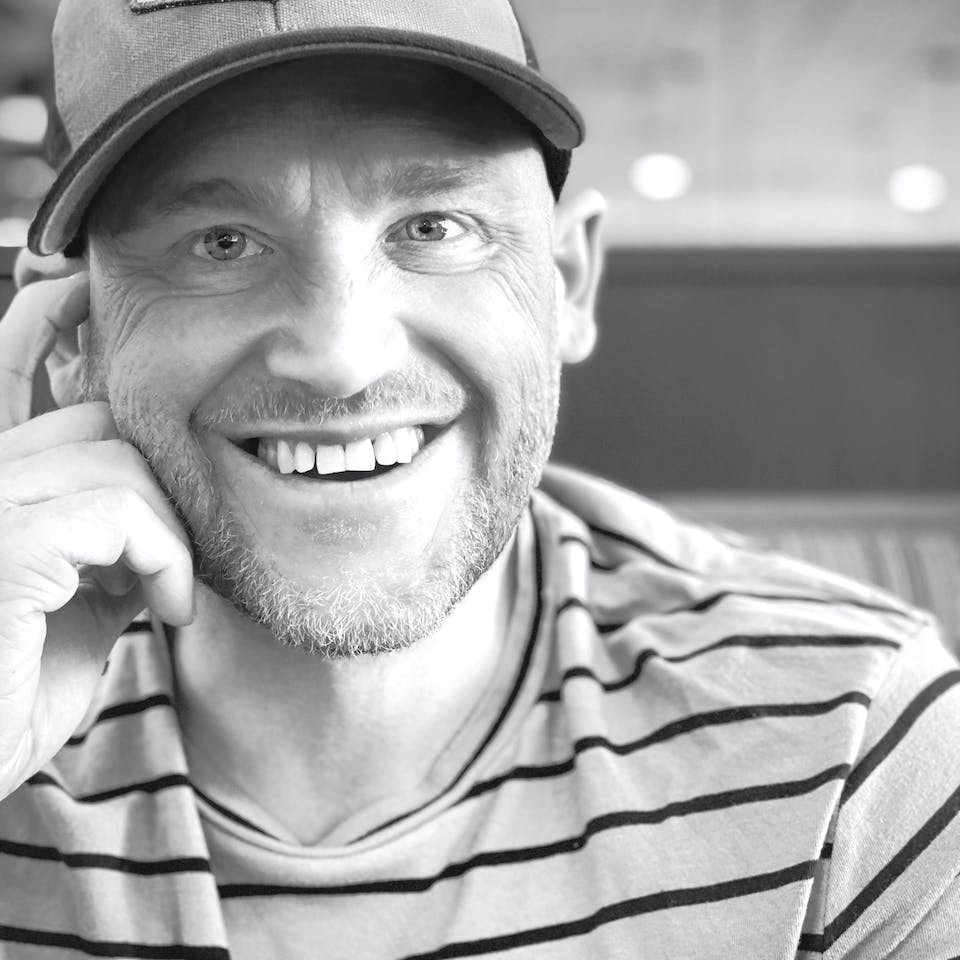
Behavior Counselor/Executive Producer/Host
Jeffrey Besecker is a trauma-informed behavioral practitioner, educator, and host of The Light Inside, a clinician-facing educational platform exploring the subconscious and unconscious patterns that shape human behavior, relational response, and adaptive growth.
His career has moved through hospitality leadership, culinary culture, brand development, community-building, entertainment marketing, and clinical behavioral education—each chapter deepening his study of how people form mutual trust, respond to cues, create shared meaning, and organize behavior within relational systems. Rather than viewing these transitions as separate careers, Jeffrey sees them as one continuous thread: a lifelong inquiry into how humans connect, adapt, protect, belong, and change.
At The Light Inside, Jeffrey’s work focuses on illuminating the unresolved emotional, cognitive, somatic, and relational data that often operates beneath conscious awareness. His educational approach examines how primary causal cues, implicit memory, predictive patterns, emotional biases, and conditioned responses influence the behaviors people repeat, even when those behaviors conflict with their stated values or desired outcomes.
Blending behavioral science, trauma-informed care, cognitive-behavioral principles, somatic awareness, and relational formulation, Jeffrey helps translate complex clinical concepts into clear, practical, and context-sensitive frameworks. His work emphasizes that behavior does not emerge in isolation; it is shaped through nervous system capacity, relational contex… Read More
Beyond Arousal: Recovering the Context That Organizes Human Behavior