From Trigger to Withdrawal: How Cue Stacks Shape Client Exposure, Shame States, and Trauma Reintegration in Clinical Practice
This episode explores how witnessing, paced exposure, and relational contact help clients re-engage unresolved biophysiological trauma data without collapsing into overwhelm or defensive compression. For clinicians, it offers a trauma-informed lens on how cue-linked activation, shame, and protection can be sequenced more adaptively through titration, reintegration, and therapeutic presence.


In this episode of The Light Inside, we delve into the complex interplay between trauma, visibility, and reintegration (healing).
Our guest, Steve Sapourn, shares his deeply personal journey of working through the lasting effects of sexual abuse trauma. Steve speaks with striking honesty about the struggle to feel worthy, known, and fully seen while also carrying the impulse to remain hidden and unnoticed.
We explore the concept of witnessing as a powerful tool for healing. Witnessing involves the paced, relational experience of staying with what once felt too overwhelming to hold, without rushing it or turning it into a character verdict. This approach can help restore sequencing, meaning, and contact, thereby softening self-attack, reducing performative coping, and making more room for intimacy, grief, worthiness, and repair.
Steve shares his experiences with various therapeutic approaches, including traditional talk therapy and somatic practices. He emphasizes the importance of understanding one's nervous system and how it can be conditioned by early trauma. Steve also discusses the need for clinicians to provide a clear framework for therapy, helping clients understand the goals and processes involved.
Throughout the conversation, we touch on the challenges of couples therapy, the importance of building trust, and the role of self-compassion in the healing journey. Steve's story is a testament to the resilience of the human spirit and the transformative power of being truly seen and held within relational spaces.
Subscribe on Substack for additional clinical resources as we explore how witnessing can help reintegrate unresolved trauma, reduce shame, and foster a deeper sense of connection and belonging.
Timestamps
[00:01:46] Healing through witnessing trauma.
[00:04:29] Witnessing as an alternative.
[00:10:39] Trust building in therapy sessions.
[00:12:44] Physiological responses in relationships.
[00:16:58] Nervous system and therapy dynamics.
[00:20:45] Performance in therapy sessions.
[00:24:44] Predictive nature of the brain.
[00:29:12] Childhood trauma and self-identity.
[00:34:34] Vulnerability and personal growth.
[00:37:55] Inner child healing through love.
[00:42:47] Inner child's resilience and strength.
[00:45:40] Growth through self-acceptance.
[00:50:49] Self-acceptance and emotional support.
[00:54:22] Parentification in childhood experiences.
[01:02:49] Hero's journey and personal growth.
[01:06:22] Worthiness of being helped.
[01:11:08] The importance of witnessing.
[01:12:34] New learning and the past.
Credits
- Host: Jeffrey Besecker
- Guest: Steve Sapourn
- Executive Program Director: Anna Getz
- Production Team: Aloft Media Group
- Music: Courtesy of Aloft Media Group
Connect with host Jeffrey Besecker on LinkedIn.
From Trigger to Withdrawal: How Cue Stacks Shape Client Exposure, Shame States, and Trauma Reintegration in Clinical Practice
Jeffrey Besecker:
This is The Light Inside. I'm Jeffrey Biesecker. Witnessing. At our core, most of us long to be seen, heard, accepted, and to feel that we belong. But for many people shaped by early trauma, that longing can become conflicted. A part of them wants contact, care, and recognition, while another part has learned that being visible is dangerous, shameful, or simply too costly to hold. In today's conversation, our guest Steve Saporn helps us step into that tension. As someone working through the lasting effects of sexual abuse trauma, he speaks with striking honesty about the struggle to feel worthy, known, and fully seen, while also carrying the impulse to remain hidden and unnoticed. In Steve's story, that tension is unmistakable. He also shows us something many people know intimately. That urge to fix, explain, monitor, or stay in control is often less about helping others and more about managing the activation in our own system. Sometimes healing begins when we shift from mistaking those hidden parts of ourselves as proof of defect and begin meeting them with slower, more generative forms of contact. More often, it begins through witnessing, the paced, relational experience of staying with what once felt too overwhelming to hold without rushing it, flattening it, or turning it into a character verdict. Today, we explore how witnessing can restore sequencing, meaning, and contact, helping soften self-attack, reducing performative coping and concealment, and making more room for intimacy, grief, worthiness, and repair. Because sometimes the part that stays hidden is not resisting healing, it may be waiting for a kind of contact that no longer turns pain into shame. Find out how to reintegrate this unresolved data when we return to The Light Inside. When it comes to mobile service providers, many of the big-name networks leave a bad taste in your mouth, with their high-rate plans, extra fees, and hidden costs or expenses. Mint Mobile is a new flavor of mobile network service, sharing all the same reliable features of the big-name brands, yet at a fraction of the cost. I recently made the change to Mint Mobile, and I can't believe the monthly savings, allowing me to put more money in my pocket for all of the things which truly light me up inside. Making the switch to Mint Mobile is easy. Hosted on the T-Mobile 5G network, Mint gives you premium wireless service on the nation's largest 5G network with bulk savings on flexible plan options. Mint offers three, six, and 12-month plans, and the more months you buy, the more you save. Plus, you can keep your current number or change to a new one if you like, and all of your contacts, apps, and photos will seamlessly and effortlessly follow you to your new low-cost Mint provider. Did I mention the best part? You keep more money in your pocket, and with Mint's referral plan, you can rescue more friends from big wireless bills while earning up to $90 for each referral. For many of us, trauma-shaped relational patterns are too quickly mistaken for resistance, lack of care, or character weakness. But often, they make better sense as adaptive responses organized around shame, threat, or disrupted early childhood sequencing. For our guest Steve Siporn, the issue was never simply whether he wanted connection, it was that important parts of him had been hidden for so long that being known carried real weight. And yet, as he began to share more of his story in trusted settings, the experience was not collapse or moral failure. It was relief, reflection, and a growing sense of becoming more whole in relationship. That is where witnessing becomes clinically important. What looks like guardedness or over-control may actually be a system protecting against the old cost of being visible. So, before we talk about disclosure, insight, or healing techniques, we have to slow down and ask a more primary question. What happens when the self has learned that being seen is not neutral but charged with shame, threat, and fear of being misheld? Because what stays hidden is often not random, it's organized as an adaptive intelligence. Steve, today we explore witnessing as an alternative to self-attack and how there's a difference between sharing a story and being witnessed it. But first, I want to thank you for joining us. How are you today? Awesome. How are you doing, Jeffrey? Fantastic. It's great touching base with you again. Steve, you've spoken openly about how past trauma has at times made it harder to feel grounded in your own worth, belonging, and a sense of being understood. You've also shared that explanation alone and that some earlier talk-based approaches still left you searching for a more felt sense of connection, understanding, and relational contact. Let me ask you this today, just as a general throw it out there, if there's one thing you wish clinicians would take away that helps bridge that client connection, that client relationship. Sit with that for a minute, see what comes up for you. One thing they would take away. I think this is our biggest power today. We're talking about power moves. Myself, I'm curious about that, where your insight comes in and how we can help facilitate that bridge.
Steve Sapourn: Yeah, I mean I'll just tell you a little bit of me what comes to mind is in my reflection with my experience with therapy is and I didn't notice it at the time but looking back on it is I never really had somebody say like this is what we're doing here. Like for me to look back on it and say, like, how could I say that that experience was successful, like some sort of setting of the landscape for me. So I could understand the zone I was operating in because often I felt with traditional talk therapy, I felt really good at the time coming out of it. You know, and I've had various of them over time that I felt like when I looked back on them, it was hard other than understanding, which was really important because you need to understand the triggers. But beyond that, it was hard for me to say where I was getting the tangible benefit. And I never really, you know, I'm a goal-oriented guy, so I never knew what any of the goals were.
Jeffrey Besecker: That's interesting. I'm going to relate to that with my own experience and I can share that with you. I know from that perspective, being kind of goal oriented, wanting tools and processes. And for me going in, I wasn't so much looking for the validation piece, although I learned eventually the validation piece was part of what was missing, part of the guilt shame cycle. But I wanted to have the tools, the practices to take. I'd go and I'd talk. I dump a lot and would kind of pause and think, okay, now what, you know, what are we doing with that? So is that kind of how you related? Is that similar?
Steve Sapourn: Yeah. I mean, I think some of that, and even if the goal was, let's just say, we're going to have a relationship in here that could be a model of how you might operate in other relationships. So at least I could get a sense. I mean, you know, certainly I'm interested in tools and things like that. And I don't know that the talk therapy, I mean, I'm sure there is a lot of them, but even just a lay of the land of what are you trying to achieve out of this thing? Because just in general, all of it through all of the different modalities, What I felt like is I was getting in a narrow lane of somebody's expertise, and they were often very good at it, but I didn't really have a picture of the entire process that, for me, with someone with significant trauma, how I could go about it. And I sort of created that for myself, I felt. And so I think all along the way, like, it would have been beneficial to know where each piece fit in my overall healing process. or just growing puzzle?
Jeffrey Besecker: You know, I think that's something for me. I've kind of tried to evolve in my own practice out of sharing those similar experiences, Steve, where it wasn't real clear-cut direction. Client alliance is something I've learned is what's that partnership? What are we working toward? The fine line there also, I think we navigate a lot of times where interpretive intrusion comes in, where we start to over-predict, we start to over-forecast. depending on somebody's Q-Stack models, how they respond in relationship, where their trauma reintegration is, what current pattern might be popping up. A lot of times we sometimes try to avoid oversteering, you know, because we're activating a lot of things. So from that perspective, what do you feel are some things that clinicians can do to help bridge those gaps?
Steve Sapourn: Hmm. Well, I think, honestly, the initial trust building phase is sort of important, right? And so I don't necessarily know that I would need this information on session one. Right. But I think like more of a period of time where we're establishing who we are, how we are in relationship, and then they get a sense of me, right? And they probably after, I don't know, I'm not a clinician, three sessions, whatever the number is, where they have a sense of what's going on here, to kind of step back a little bit. and talk about what is observed to see if even the direction that they're going is one that I wish to go in and how I want to spend my time. And yeah, that's it. It's mostly just a little guidance and direction. And the way that potentially, I mean, I know in more institutional environments, right, there's a treatment plan and oftentimes a client will just sign off on it and they'll know exactly what the whole thing. That might be a little much, but a hybrid of that between building trust and then stepping into let's create some change. as opposed to just staying in a cycle of talking.
Jeffrey Besecker: So from that perspective, we'll try to find a way to delicately edge up to where do you feel that line for you blurs where we've established that level of connection. that familiarity, that degree of trust, and where then do you step back a little from that and allow the clinician then to trust a little and take some of that lead and follow where they might be allowing you to guide yourself maybe?
Steve Sapourn: Yeah, I think that there's an inherent trust. I think that's what I was doing generally. I thought they have a plan. You know, like maybe part of the process was not detailing it in some way. And now that I look back, because I have different things, you know, so in talking with a talk therapy clinician, If it was, you know, I was given the advice, sit and calmly listen to your partner's what's coming up for her and, you know, fully hear it and repeat it back to her and kind of have this experience of her being listened to. And when we're talking, not in the heat of the battle, I could definitely do that. I could agree to it. I would want to do it. But my nervous system did not allow that. when it was actually happening. And I think that was physiologically that it was nearly impossible for me to not start to deflect or do something in those circumstances. And so I got into a cycle of feeling like, more of this kind of innate brokenness, right? Because I'm hearing a very reasonable expectation of how one would behave, one that I agree with, no problems with it, how I want to act. And then I go in and it actually is happening and I'm dealing with physiological systems that at some point take over my behavior. And I cannot imagine, I know the therapist saw it, especially when there was some sort of couples counseling, they saw it in action. But I never had anybody explain to me that honestly would have made me feel more empowered. Like, OK, so now what I'm dealing with is something physiological. I need to kind of be able to calm my nervous system down in a way to be the person that I want to be. But I think what happen with me, is it reinforced to me unintentionally that there was something on a deeper level that was wrong with me?
Jeffrey Besecker: Yes, it tends to be a fairly common occurrence for me, my own shame cycles. Whenever I would experience emotions outside of anger, I would have that activation and I wasn't quite sure what it was that was triggering that cue. There was a response underneath it. And then I would say, well, they're only seeing the anger. That's all they're focusing on. That's the only thing then that I was operating from, because it was kind of one of the one-dimensional focus that I put on my emotionality was anger. And everything else kind of got shoved in the backseat. And I can relate to that feeling of brokenness, of feeling like, well, what's wrong with me? Why am I not able to access these other things? Why are they missing this greater depth of what's going on?
Steve Sapourn: Yeah, I think in some of the takeaways, so given that you have this therapeutic relationship, it's typically once a week, maybe a couple times a week. Had I known that here is what I'm learning about myself, my triggers, how I really want to operate in relationship with other people, and what is inhibiting that is my nervous system where really I just have to expand my window of tolerance, right? So then I could be I think I would have been more motivated. I am very motivated now to do my meditation, to do my breath work, because it's not something conceptually that's good for me, and I know it's good for me. It's what I know I have to do to be the person that I want to be. And so I think a combination of those things where we're getting the traditional therapy and I'm learning all about who I am and what my triggers are like, oh, this is triggering me. This makes sense that I might get a little worked up. Then I could switch into a more somatic mode and say, well, this is what I need to do when that happens, because my thinking goes offline really at that point. And so I think it would have been, and this is what I developed for myself, it was that I needed to work through, whether it be neurofeedback or meditation or breathwork or somatic, I needed to just do those things to be able to interact with human beings the way that I chose to. as opposed to the way that my nervous system was conditioned to when I was five years old, or whatever the time frame is. And you know that quote from Viktor Frankl, freedom is the distance between stimulus and response. The combination of those two things I think is very powerful. And I never got it and I never felt in any clinicians, whether it be some other people, somatic saying, well, you need to talk to your therapist about these things. I never got it from the other side either. That's what I just felt as a patient with a significant history of things who's also motivated and going places and doing things. I never really got somebody saying, here's a framework for what you're dealing with. And there's a lot of pieces to it. And it's complex. And what I do is very valuable for it. But it's not the whole piece. And so you're going to have to create this journey of healing with a number of modalities that work in a synchronistic manner. Then I felt, honestly, like I stumbled on that.
Jeffrey Besecker: Throughout your course of counseling therapy, did anybody take the time to pause and break down first how our nervous system is paced and sequenced, where we hit those activation points, how we kind of monitor, engage for when we're starting to do that? When we start to kind of check out or dissociate or when we're starting to elevate and activate beyond, we're given that monitor of our breathing, but then that becomes an area of attention or focus. And sometimes we're then pulled out of other areas of that sequence.
Steve Sapourn: So it's interesting. I've done a lot of therapy over a long time, so I can't say that no one's ever done that. I did have one particular therapist, which I thought I really appreciated. It was couples therapy. And my wife and I both have this experience with trauma and our nervous systems would get out of control. And we were in the very first meeting and two hours to get acquainted and we were getting elevated. And he paused it and he said, I don't think this is going to work for you. You know, he said, you clearly have a lot of trauma and addiction issues. And this is talk therapy, and I'm not an expert in trauma. You should go and see somebody who is a trauma expert to kind of get a handle of it. But I don't feel that I got somebody saying, well, let me give you the basics, right? The way you were saying, let's just work with what's happening here. And I think that the other part that would have been very helpful is for, especially in couples therapy, when you're talking about it, for each of us to have a little empathy that once that physiological trigger happens, it's nearly impossible for us to mitigate that behavior in real time without, you know, we can calm it down maybe. And so that could be like, oh, we're both on the same team together. We're both doing it. You're doing it. I'm doing it. And But what really became of the couple sessions was those blow ups. One person might be handling it, but then when they get elevated and lob some bombs at the other person, then they got elevated. And then it became more conflict.
Jeffrey Besecker: You know, here's something interesting relating to that. And I didn't quite put my finger on this till much later after therapy, after it kind of went through my initial cycles. Going in, I didn't realize when I was monitoring what the therapist was doing. And then how subconsciously I'd start to watch them do something. And then there was a part of me that would start to say, OK, well, if she does this or asks this, then this is what my answer is. So I start to go ahead and jump to meet what that therapeutic, quote unquote, expectation was, rather than really getting into contact with those deeper patterns and cycles that were going on. me. I realized then through that later on where for me I was starting to kick into the cycles of guilt and shame. So I would start to watch and okay she's reading me now. So now I'm starting to project. I'm starting to pull up different performative pieces and say, well, to meet what that question is or where they're going with that line, I'd start to speculate. I'd start to reason. And then I would start to lose contact, not only with what was going on internally, but also contact with some of those deeper parts that were trying to come up, some of that deeper work, and especially some of those deeper needs Because now I'm trying to meet what the clinicians need is rather than going back and looking at my early childhood needs where all of those parts were hiding and starting to speculate.
Steve Sapourn: Yeah, that makes a lot of sense because I think what I was feeling was happening with my relationships is. okay I'm with like a calm and wise person and generally almost universally one-on-one with a therapist I came out of the experience feeling more grounded and feeling good and so what was coming to mind was Yes, this is a model kind of relationship and I'm seeing how he or she is behaving and now what I'm supposed to learn is to be kind of like that, right? And then that's where I believe the performance comes back in because at some point you want to be a good student. and sort of mirror that thing and walk out of there. And to your point, I think some of us who want to people please, I mean, also just want the therapist to feel good at the end of the session.
Jeffrey Besecker: That's a very realistic perspective on that, Steve. We are trying to find that belonging. We're trying to find that acceptance. If we have that pattern of self-monitoring in our past in any way where we're becoming vigilant, that starts to come back up. You know, that starts to become, we're now trying to meet the expectation, whether it's spoken or projected, or whether it's a very blunt and direct from a caregiver or a provider or someone within our environment.
Steve Sapourn: Yeah, and the other thing now, I'm just thinking about it, but I always had very good experiences with one-on-one counseling, and marital or relationship work always became much more difficult, because then it was more of the heightened thing. And I, as a layperson, before I knew anything about trauma or what was going on, I just characterized it literally as, man, couples work almost makes things worse. And I've been to a lot of couples therapists and there was a lot of things about sort of calming the nervous system or maybe we should take a break and all that but still again nothing telling us what was actually happening and why it was undermining us.
Jeffrey Besecker: Yeah and again that's where that kind of pacing and sequencing comes in because you tiptoe up to those points day in day out in your relationships where okay this happens and this happens and without going into cycles of rumination and also looking at how we go into cycles of rumination you know we're starting to follow the loop we're starting to follow the pattern and sequence sometimes we're starting to predict and project forward sometimes we have to just hit that stop button hit the brakes without Moving into bracing where we completely shut down close everything out. Yeah, I'm kind of slow that pacing. Okay, let me observe what's going on here Aha, this is where I tend to hit that pattern where we call them stuck or you know that trigger point What happens next is that sequencing and pacing we're starting to witness that again? If we're somewhat dissociated or checked out from that, you know, we don't always notice even when we start to kick into some of those unconscious patterns because it's operating within that nervous system. You were speaking on your podcast this week about mirror neurons. Are we actually watching the process or are we starting to forecast and predict because the mirror neurons themselves aren't consciously present? We're just using that feedback and that information to start that prediction cycle. Sometimes when we push forward in that prediction, we're starting to draw back into that past experience. Now let me measure that, but looking through what's going on here and start to apply that kind of as a rule or suggestion of what's going on.
Steve Sapourn: Yeah, actually, you know, it makes a lot of sense. I mean the predictive nature of the brain and Yeah, I mean I think that's been a real tension between especially between the couples and the individual therapy for me because in a solo environment it was always controlled and it was good and I felt really good about it and then in the couples things that would fall apart and And probably I was going in there with that prediction, right? Because I'd had it happen before and then I was braced and it almost made it worse because my nervous system was getting dysregulated before I even walked in the door.
Jeffrey Besecker: Yeah, you're starting that cycle, you're going back to those unconscious patterns again where the system is already moving through a cycle of prediction, you have that habit ingrained, it's neurally wired, it's not broken, it's just doing its role. It's trying to do its best to give you your best outcomes. So again, it's working a little bit ahead and even our logic is playing catch up because that's why a lot of times we say, don't necessarily jump right into that narrative because you're explaining is even behind that by a few milliseconds because the system wants to try to keep ahead of what you're going to guess. We've grown that adaptation over time, just like going out there and stepping in front of a bus. You look and you start sensing things. You start hearing things in the environment. You start to kind of tune in a little bit, and that's predicting before that conscious brain even comes on. So there again, that sequencing and pacing comes in.
Steve Sapourn: Yeah, totally agree.
Jeffrey Besecker: You know, and that's a fun one to look at because we do start to then pick up a lot of cultural narrative around it. Well, you know, my mirror neurons, they're predicting for me. My mirror neurons are mirroring what's going on. Well, you're starting to kind of generally fall back into patterns, but it's not necessarily reading what's actually going on in the moment. So a fine line there and then to look at that becomes kind of a whole nother sidebar conversation. But it speaks to where I'm at with it this week and where you're kind of at is Where do those predictions start to fall apart a little bit because we're missing data. Where do we start to dip back into that past again?
Steve Sapourn: Yeah, and I think specifically about that portion of it as a patient Knowing that, so if I don't know about how my nervous system is working, right? Then I just see it and I can't even say that I'm really working on it, right? So if I, me as the person, the way that I'm wired, I understand that Hard work is necessary for things. So if I came into this relationship knowing like well, you know, I have this nervous system thing I'm working on it. Then I could give myself a little grace along the way. Well, okay. I wasn't perfect in that session So maybe I'll double my efforts or I can apologize in a way that felt less threatening For whatever reasons, apologies were threatening to me when my nervous system was more energized. And as I learned my whole dynamic, then I could go and say, look, this is what happened. I was in a conversation with you. I got over activated. You know, it wasn't really me. I wasn't expressing myself. That's not the man I want to be. easy to apologize because it was something that I thought was not innate and that I was working on and that I hadn't fully solved it and I'm sorry, you know. But I think before, without having that framework, an apology felt like a self-attack to the point that Um, it was very difficult for me to do it without creating a whole story around. Yes, I'm apologizing, but here's why it's really your fault.
Jeffrey Besecker: So let me ask you something here. If you're open to a little exploration, I'm going to ask for some permission first, because that's what respect's about. Right. So if we can look back a little bit in your open day.
Steve Sapourn: Yeah. Oh, yeah, absolutely. I'm open to it.
Jeffrey Besecker: Looking back now, where you are in your trauma journey, just to edge up to that question, where in your earlier life or in your upbringing, in your childhood, can you first remember recalling connecting with those feelings and those responses?
Steve Sapourn: It's difficult because I, came up in an environment that was very chaotic at a very young age. And that's another part of the shame and all of it because I don't remember. It's not as if I had a certain kind of life and then I had an event and I could notice changes. What really that I noticed was that there were things wrong with me and you know one of them was stuttering and I didn't even know this even my own self until I I uncovered my sexual abuse in hypnosis, and I had all these memories of him telling me he was gonna kill me if I spoke. And then I went back to my sister, who's 12 years older, and I asked her, I said, did I always stutter, or did it sort of come on around this time? And she told me, you know, you had a slight predisposition to it, nothing we were, you know, going to a therapist or whatever. But around the time that I was getting abused was right when I went to kindergarten. So they thought I was nervous because of that. So in my experience, I was nervous. And the stuttering thing is a little similar to almost like couples therapy in that when I was alone, I could read a book very fluently out loud. And then when I got in front of people, I stuttered on every syllable. But those things were happening to me so young that they really became who I, my self-identity. I didn't have a, I didn't know myself in any other way.
Jeffrey Besecker: From that perspective, do you feel it's easier to look at how that chaos kind of disrupted that sequencing?
Steve Sapourn: Yeah, so when you say that chaos, what sequencing specifically?
Jeffrey Besecker: So, you know, you said growing up in that environment was chaotic.
Steve Sapourn: Mm-hmm.
Jeffrey Besecker: It's easy to see then, or it may become easier to see. I'm kind of guiding you too much here. Yeah. In that perspective, it makes sense when the environment's chaotic that you lose that sequencing, that you're kind of searching for even that sequencing. Do I speak? Do I remain quiet here? Finding that voice.
Steve Sapourn: Yeah. I mean, the situation that I was in was dangerous.
Steve Sapourn: Mm-hmm.
Steve Sapourn: So, um, I was constantly threat sensing and, and very attuned to that. And for whatever reason, because, you know, specifically with speech, I had this overt threat that I was told that I was, you know, I was going to be hurt if, if I spoke, but I just did not have a handle on it at all. And as an adult, once I sort of, you know, I kind of talk about his trauma as an injury. I mean, I think it's really more an adaptation that was wise given my circumstance. For me, the reason why I talk about it, for myself and to lay people as an injury is seeing brain scans and seeing it and being like, okay, this is just the way a brain might develop given the circumstance it was in, and now I can change these inputs. It was very empowering. And I also knew that given that I'd had 50 years of a certain way of being, I wasn't going to change the inputs and tomorrow all of my behavior was going to shift. But it was when you're working on it and then you identify the time in the heat of the battle and relationship mostly, where you actually operated a different way. And then that's the beginning of it. Like, wow, this is working. And look at the better result that I'm getting. And that's, again, why I felt that I would have been so served by somebody telling me. Even I went to trauma therapists after you know, that experience with a couples counselor, and mostly what I got was, you know, good trauma therapy trying to do this, but it just, I don't know, maybe I'm dim, but it never got put together for me in a way that helped to reduce my shame, which I think there was a lot of, and it definitely could have been, and allowed me to work with it and engage in a framework for healing.
Jeffrey Besecker: I want to thank you first and foremost for that vulnerable open share, Steve, because I know how difficult that can be. And I also know how liberating, freeing, when you can finally put your finger on that and form some understanding around it. So thank you for that.
Steve Sapourn: Yeah, thank you. I mean, I've really, for myself, and I certainly don't think anybody needs to feel like they owe this to people. but for me being vulnerable about the situation and not in a vulnerability in saying like, woe is me, this has happened, but it's a vulnerability in explaining kind of the arc of myself to people, like really getting into it and saying, this is where I am. This is where I was. I'm going here. And so people really got to know me in a way that I had hidden from everybody in my life, friends, family. And then as that started to come out in a group context, in a men's group, and I started to get really, just really good reflections, where I was kind of saying, well, what did you see when Steve was talking, that kind of thing. And as I became more vulnerable, And show that there were just sometimes where I just wasn't in control and I wasn't happy about that. I got the responses from human beings that also are having those experiences in their own way. It was a whole different experience of life, really. And for me, I know that it's been helpful. I've had a number of people just tell me, hearing my story, just me communicate it has been a benefit to them. And that feels really, really good. And it feels like I'm more of a whole person, like I'm in a relationship with you, I'm trusting you enough to hear my story, and I'm not like throwing it out to everybody. You know, like I'm using a little wisdom there as to who can handle it, but it just calms me, I think, to be able to give a little color around things.
Jeffrey Besecker: That idea of witnessing comes into play there, and I know that was something that was monumental in my shift with Guilt and Shame. There was a part that was trying to be obscured, trying to keep it hidden because it wasn't being witnessed. And I wasn't even aware it needed witnessed, that guilt and shame, because I was so muddled and over-functioning in monitoring the anger aspect. I was hyper-vigilant about it. So I'd watch, how are they reacting? How am I triggering them? Became this unconscious arc for me, so it kind of got buried. That part that needed seeing, that guilt and shame, was exiled. You know, I kind of moved it to the back. So that act of witnessing each other is so important because we are observing who's showing up, which part's showing up, how that person is in relationship with you in that moment. And I think that's so integral.
Steve Sapourn: Yeah, you know, it's interesting. One of the techniques that's kind of a hybrid of what I've learned in different things that's just been helpful for me is the further I got into it, the more I realized that almost every really challenging sensation and feeling was related to my inner child, like little Steve. And, you know, I would do somatic experiences, titrating and this kind of thing. But really what I came to was I visualized the little fun kid that I was. And wherever that sensation is, I place him there and I just send love to him. And I don't really have to worry about the anything or titrating or all of that. Once I just center that I'm putting him here and I'm saying and I'm just giving you love, you know, like, you know, maybe there might be a little bit that you didn't deserve it. But really, it's just the notion of I see you and I love you. And beyond that the story used to be really important to me, you know Oh, I'm scared of this and that and you know and blah blah blah and maybe I've just worked through some of the story so I can I'm sort of Be more efficient at it. But for me that has been a by far the most effective technique that has helped me to feel like I am at peace with my difficult sensations because I'm literally going into that difficulty with love.
Jeffrey Besecker: Yeah, I think it's such an integral piece. Even I know in my own cycles that, again, being able to witness it, observe it, go back to that childhood and say, yeah, now I realize what feelings were coming up. Now I realize that guilt and shame was lying under there. I had no clue up until I went through a little age regression with Marissa Peer online. Step back and go back. What's that earliest memory? That is kind of that painful, wounded, injured part, you know. When we injure ourselves, we get a bruise, we cut. We're leaning into that. We're accepting that part of us needs attention. It's reframing that again, you know, where are we witnessing that internal part, that internal experience? And so often we're trying to move away from it or past it, that again, we just keep stuffing it back, stuffing it back, trying to run from it with that idea that either I can outrun it or I can avoid it. I'll defend against it. Eventually it'll go away, yet it's gnarly wired. It's a part of who we are, you know, and it's, it might be a very subdued, gentle, delicate part. Can we allow that to bubble up a little bit? That gradual exposure. I went through a workshop last evening, looking at a concept called flashing, you know, and it's basically like taking a flash card. You expose a little bit of that experience. Okay. Well, that might be a bigger dose than what I can handle. So let's just rip off a corner of that card. Flash it real quick. Okay, what comes up? Now that's beyond my capacity, so let's let that rest a little. We're going back into that pacing and that cycle of sequencing. You notice when the sequence starts to activate your nervous system? When you start to lean into those triggers? When you start to be activated? It's okay. We witnessed it a little bit. Maybe I'm not ready to fully dive into that pool. Let's step back and go back to where that reset point is.
Steve Sapourn: Yeah, that makes a lot of sense. And I think that as a lay person and starting to hear the feel the feelings like that's what you have to do to be and so then I just would sit and like pay attention to my difficult sensations for an absurd amount of time because I just thought, well, this is what I have to do. And then, of course, I learned to titrate between them. And I think the other thing that when we're talking about the inner child and working with it, is, of course, there was a lot of acknowledging the sadness and how scared and all of that. And this might just be for my psychology. I don't know. But what was helpful to me to have more of a relationship with that inner child was to also say, man, what a hero you were. Like what, like look what you handled for us. Look at all the things that you did. And yes, you were sad and all that, but I'm also gonna thank you for all the things that you actually did so that big Steve here can be sitting here. Cause I really feel Given the experiences that I had with sexual abuse, with gun violence, I witnessed a mass murder. I lived in a home with domestic violence. I had a lot of different traumas going on. And being a very heavy drug addict for a long time. I could not have made it It would have been very reasonable that something would have happened to me in a car an overdose and to sort of I think also help with the shame right because I could I could not only just acknowledge you're scared, you know, which really to me is probably processing you're kind of a little weak and
Jeffrey Besecker: You know like because i'm still dealing with all of my programming What's realistic, you know, let's let's back it up if you're open to that Yeah, what's realistic for a child to hold? Where does a child draw that responsibility and where? Does that realistically fall as a responsibility on the caregiver the adult the parents? That's the nuance point Yeah, is that? a realistic expectation to thrust on yourself as a child, especially if you grew up in that chaos where you're not being mirrored those experiences.
Steve Sapourn: Yeah, I mean, it's certainly the things that I was going through were not realistic for me to handle alone. And I did have a loving mother who did not, who was very protective of me, but she was also under threat a lot. So it was in her nervous system, even being loving, you know, if you were Being a kind of abuse the night before and you're loving the next morning the nervous system still fired up. I don't know that I was getting the calmness and yeah it's just an experience that you know now I feel blessed that I have these experiences because I know I'm able to communicate. real empathy and connection to people who've been in a variety of circumstances. And I can really say to that person who's experienced sexual abuse, I know what that feels like. I know what it looks like to have your dad hurt your mom. I know what that's like. And it Now I wouldn't trade those things because they are a benefit to my life and the journey of discovery and just the notion that, okay. I went through some things and I, you know, I'm where I'm at and I'm by no means some, I got all kinds of things that I'm working on, but I, you know, it's clear there's progress. Right. And so it also gives me just a sense, you know, the kind of the deeper, the wound and the more you feel like you crawled out of it, the more respect you have for yourself and the more you can honor yourself. And also not to undermine anybody who gives into addiction or whatever. I fully understand that, and I'm not saying they're less than in any way. But in my experience of starting to get a different life, I can use that in all kinds of ways now. When I'm working in some business thing, Is this really that hard, you know? Yeah, it's an uncertain environment, but I'm pretty good in uncertain environments. I'm pretty good at being threatened and that kind of thing. So now, the biggest wounds that I had are certainly my strengths and it's what I've oriented my purpose around in life is to be of service in that way.
Jeffrey Besecker: Again, that's such an integral part, looking at that pacing and sequencing, because I went from this point A, now I'm at this point B. Look how far I've traveled. Look at what I've learned to endure. Look at where that capacity's now expanded. And I'm able to hold that with a greater degree of witnessing. I'm able to look at a greater degree of nuance. I'm able to open up a greater degree of acceptance of, well, this was the experience that I'm no longer running from and I'm no longer burying it. Look at me, you know, and it's a very good, healthy self-affirmation because you are, again, measuring what you've accomplished, where those wins are.
Steve Sapourn: Yeah, and I think it's really important as I'm reflecting on the time periods where I'm just repeating the same behaviors, right? That can become a negative reinforcing loop because I'm intending to be this and I just can't and I don't know why and I don't know the mechanism. So there must be something wrong with me because I'm agreeing over here to be a certain way. It doesn't seem unreasonable to ask. And for some reason, I cannot respond to a reasonable ask by my loved one. And so The other side of it goes, when you're repeating that pattern without the overview of what you're really dealing with, I think that can almost make it worse, right? Because you're seeing yourself in that way. So yes, I think again, we keep coming back to the same thing, but knowing that you're dealing with something hard, And the other point of it is, as I reflect on it more, of course, I'm trying to expand my tolerance window to what I can handle. But I also noticed that my initial inclination was to try to then remain inside that window, which is not really where you want to be in growth. And I really noticed They're like, man, you have these routines. You go to the same locker every time in yoga. You do the same thing. And I'm like, why are you doing that? And so it was sort of then a realization of, OK, I'm dedicated to expanding this zone a little bit and living kind of more free. But now I have to make sure that I don't contract into it and for me that would become sort of a routine where I would try to almost eliminate the things and really what a Now, of course, I'm trying to do a whole new career. I'm starting a podcast. I'm writing a book. All these things are very uncertain. A lot of feelings of insecurity come up. A lot of self-doubt comes up. The way I'm working with it is Oh, this is part of the experience. I could never have this experience in its full way without these feelings. This is natural. Life isn't about being happy. Life is about having these things and coming back to set points. What I've learned has helped me, I think, move from almost intentional stagnation into, no, I can actually use this to expand who I am as a person because I'm not so threatened by a particular outcome because now I know I have tools and I have things to down regulate and get into that zone of safety. And sometimes I can't do it that day. I mean, I still have my moments. and I still have the times. Your energy gets drained, man. Yeah, you know, it is what it is, especially when I don't sleep. Life happens. Yeah, you know, and so, but I can give myself, it's just a different dynamic and I just really, it's such a different feeling and I just wish it for people so much because I know just what it feels like to have the other program running and it just feels like God made me wrong. And, you know, that is something that I know millions of people are thinking right now all over the world. And I do not believe that to be true at all. And I used to think it about myself.
Jeffrey Besecker: You are perfectly you, my friend, and you are such a warm, wonderful human being. And I am so grateful we've had this chance to connect. Thank you so much. Reflecting back on our last conversation, I want to kind of stay with this a minute. We kind of touched on that idea of parentification. I'm going to pause here. OK. Thanks for sharing this raw moment with me before we move ahead, because I'm seeing that release. And I just want to be with you right now in this moment and hold that with you.
Steve Sapourn: All right. I feel good. Thank you.
Jeffrey Besecker: I'm so proud of you, brother, because you have come many, many miles. Yeah. And you have such a light and gift to share with others. Let that shine. You can see that capacity opening. Yeah. Staying with it. And before I move along on my interpretation and move down that path, that too is part of that witnessing. Not to monitor you and say, okay, let's get a grip on Steve, but to allow that presence for us both to find that spot and that pacing together. To not move too quickly beyond it for you and for me.
Steve Sapourn: Yeah, that's important, and it's an important modeling, I think, in this relationship. As a man who was often told, I don't want you to solve my problem, I want you to just hear me, and just sitting with the emotions was very difficult. And at some point I learned that I'm not solving that problem for her or my kid, I'm solving it because I just want to monitor my own system. And so to be able to mirror that I can sit with your emotional response, nothing wrong with it. We don't have to change it. You can just have it and then we can pick up the conversation again. And it doesn't, it doesn't like, you know, nothing changes. That's the kind of thing in a therapeutic relationship that, you know, I witness and I say, OK, this is this is the way to be. And so I appreciate you modeling that.
Jeffrey Besecker: No, that's that witnessing again. I'm watching things. I'm like, I don't want to interpret into this. I see you kind of deflecting. I see you kind of tensing, embracing. And I'm trying to hold that space with you, OK? I don't want to move too quickly out of that for you because you start to move into patterns. And when we do that. We tend to do that, you know, we all tend to do that, I start to do it. Sometimes we get that discomfort was, oh, Wait a minute, what do I do with this? How do we kind of open that up again and say, I see you, man.
Steve Sapourn: Yeah.
Jeffrey Besecker: I'm here. I'm right by you and I've been there. So thank you for opening that up for us and sharing that and showing that. I know that's not always an easy space.
Steve Sapourn: Yeah.
Jeffrey Besecker: So if we can move back just one second now. Looking at that idea of parentification, we kind of stepped up to that where as a kid, you start to take on that role or that responsibility of the adult, of the caregiver, of the one who's supposed to be in charge. Yet we don't fully have that sequence. We haven't fully learned that model or that tool. It's often chaotic because now we're starting to take on that responsibility or that agency for others. How does that shift that perspective for you now?
Steve Sapourn: Explain your question a little on me. So are you asking me about my experience?
Jeffrey Besecker: Looking at that need in childhood where the adult Is supposed to be the model. They're supposed to be the one To share that without going into that guilt and shame Without putting blame on them. It's just simply allowing yourself that grace to say again I'm just a kid I'm not there yet. The pacing and sequencing isn't there I'm not developed to hold that.
Steve Sapourn: Well, and in my instance, as I mentioned, I had a very kind and loving mom, and I could see my mother being hurt, and it was easy to see. So now there's, I don't have a male model sort of showing me this kind of love and connection and mirroring that I should have gotten. And I also feel like my mother who is actually doing that to the best of her ability is not getting it. So I am trying to be sort of the man in her life that is giving it to her. at five years old, you know, and so my brother and sister have moved out of the house. You know, by the time I was six, my siblings were gone. So I had siblings, but they had moved out because they were older. And this is when the things started to become a lot more difficult with the abuse. So now you're a kid and you're also trying to tend to your mother and give her love in a way who knows whether it's appropriate or not, but you try to do the best you can. You know, while simultaneously so desiring the love of my father, but also literally being under pillows, holding my head, just hearing the noises and stuff, praying to God that he would take him. It's like, get rid of this, dude. And so it's a very challenging circumstance for, you know, a little kid to be in. And then, of course, the mother who's being abused. I mean, you can't expect her to have every psychological tool at her disposal either. So, yeah, I mean, I think it's a it's a real issue. And It's just a very difficult one to unpack in real time, certainly in 1975. Yeah.
Jeffrey Besecker: And reflecting back at that age, none of us have the developmental ability to be there yet. We add any external abuse, any kind of external chaos to that, that adds fuel to the fire. And it all just draws back to going back now and loving that part, that child again. Giving it the need that you know, it's all right that you were perfectly you in that moment you were Right where you needed to be and you did adapt In any manner that got you through it Yeah, and and and some of those things are very difficult and my personal story is
Steve Sapourn: you know, I asked my mom, why didn't you leave? And the experience was, well, I couldn't even get a bank account back then. And I didn't know Well, you know there wasn't divorce laws and whether your father would you know and and what I penciled that in in my mind was she basically Intentionally understanding what was going on gave her life for my own And that was, you know, it was very difficult for me for a long time until as I've gotten further through this process and become a parent where I could say, I understand that choice and to feel worthy of that. That was the thing, right, that like, why would she ever do that for me? It didn't make sense when I was hearing that at 17. As I'm older and got more experience and have a little more self-love and a little more worthiness with me, I can understand that and I can say, I get what you did and thank you.
Jeffrey Besecker: So looking back on that experience now. And pausing and sitting with it a moment. What memories or feelings come up around watching that and observing that in your mother?
Steve Sapourn: Yeah, I remember the conversation, the specific one that I just was talking about so well, and it was more a state of shock in that moment, but I know that My sense of it was, she's a much better person than I am. And why should it be her? And then a lot of shame around it, because she was a very loving person, and people were drawn to her. And she had that through all the things that she witnessed and was hurt. hurt and cancer that riddled her for a decade. She was able to love and it was very noticeable. 800 people went to her funeral and she was not a prominent person or any of that just by the power of the way she operated in the world. And then to feel like basically this broken I was getting in a lot of trouble doing a lot of things that weren't positively accepted by the community. This doesn't seem right. This angel, and she's not a saint, but in my view, I thought of her like that. This doesn't make any sense. It should be me. that is gone. And that's just something that it's all part of the process. And now I understand it. And it was a big sacrifice on her end. And I mean, I'm so thankful for it. And I'm also understand it a lot more. And I can see it as a viable decision to make. Whereas at the time, I just thought it was crazy.
Jeffrey Besecker: So if I can hold that with you for a minute and you're open to some feedback on it. Yep. We built that bond of trust. Let me hold that with trust and witness a little bit. Okay. If that frame of survivorship guilt were to come in, you know, you feel that sense of guilt and remorse for what she's going through. Also for what you feel you're not able to provide in that moment. How does that land with you?
Steve Sapourn: Well, I have reframed it in a very dramatic way for myself. The one thing that's been very helpful in my journey is to look at my life as well as individual chapters of my story through the lens of the hero's journey. That helped me for a lot of behaviors that I'm not proud of, but I also don't feel a real need to get very down on myself about because of where I was, if I can put that onto her, well, she did the hero's journey and I'm the legacy. So what it does is make her less of a victim, right? This is a choice. She could have chosen another way. She chose a certain way. And so instead of it feeling like A weakness. I can just respect her a lot more. Right. And it also is its incentive for me. Right. Like this this person's life path was basically to say, I'm going to sacrifice for you. And so what are you going to do with that, Steve? How are you going to operate in in the world? It's not like a pressure that I live with on on a daily basis. But it is an inspiration for me and something that I feel is just part of the reason why I have what I would call, I think, what I'm doing and my path has been courageous in many ways. I think that I thought of it as maybe fear or just love and now I've reframed her choices as not only love but as courage and her path and this is what I've decided my life is going to be. And so now I've decided my life is going to be a certain way. And can I operate with that same sort of love and courage that was modeled to me in a very difficult situation by a person who really cared about me?
Jeffrey Besecker: Again, I want to thank you for very openly and vulnerably sharing that experience and how you've reframed that now and how that's kind of expanded where you are with that capacity.
Steve Sapourn: Yeah, and I think it's really important for me. I never really realized the power of that reframing. And I often, before this process, I didn't like telling myself anything that I didn't think I 100% was. I didn't want to create an identity that I thought was false. in some way, it just felt like a contradiction to me. And what I learned is now I can create an identity that I'm stepping into and I might not live in all those moments. And especially the hero's journey helps you because the hero's scared and doesn't know what to do a lot of the time and necessarily in that framework needs allies. You're not doing it alone.
Jeffrey Besecker: I'm chuckling because that idea is popping back up there in the back of my mind. And as we're kind of tailing off here today and we wrap up where we're going with this, I was going to pose the question, how as clinicians and clients, as human beings, do you feel we start to form that ally bond where we witness and observe each other and hold that space with greater capacity?
Steve Sapourn: Well, I think from my perspective, one of the things is feeling worthy of that. And so the concept of the hero's journey, which is actually studied, and people who orient the telling of their story around it have more resilience and more meaning, but it allowed me to start to get enough self-worth to then say, like, I'm worthy of being helped. And I remember at the beginning of this process I've had as my life changed and I started to get into this, especially when men would help me. I mean, I've had a couple mentors be like, yes, I'll do your podcast. How can I help you? What can I do? It was emotional every time. that they would take the time for me and I asked one of them you know one of them is a he's a billionaire he's very he's got a lot going on all kinds of things and I was I told him I was like I really appreciate that every time I text you and every time I communicate with you you respond to me quickly I know you have a lot going on and he said you know you're an awesome person. You're an amazing person. I want to do that. And it takes a while to let that set in, right? To hear that and not undermine yourself. And there's always a little questioning, but I really do think it was when I started to believe that I was worthy of someone being my ally. And before that, I tried to be so self-sufficient because, you know, either I just wanted to control things or I didn't feel like it was, why would somebody do this for me?
null: Yeah.
Jeffrey Besecker: You are such a warm and loving human being. And I'm so grateful that we formed this bond in this relationship, Steve. Thank you. Thank you for sharing these insights with us today.
Steve Sapourn: Thank you, Jeffrey. I really appreciated the conversation. This is a, been a very unique one. So I hope we've
Jeffrey Besecker: We followed a thread today and just kind of let it show up and witness where it went today. And I truly, I feel like I've taken so many lessons away from your heroic journey in that heroic example. It's allowed me to open up and show those tender, vulnerable sides of myself today that sometimes, you know, even going into our conversation today, that reluctance started to creep up. Where am I going with this with Steve? Where am I going to serve Steve as another human being and be worthy of him? So I can totally relate to where we were with that today. Thank you, thank you for sharing that love and light.
Steve Sapourn: Appreciate it, Jeffrey.
Jeffrey Besecker: Let's share a little bit of background on your podcast. Here's your chance to shine that light. Where can our listeners go to reach out to you?
Steve Sapourn: I'm about 20 some episodes in. My podcast is called The Neuro's Journey, like the hero's journey. into your own mind and nervous system. And I'm writing a book. I have a website. It can be found on all the normal podcast places, YouTube, Apple, Spotify. And I have a variety of different kinds of people on. A lot of my healing has been in psychedelics. There's a lot of talk about psychedelics and some really expert people in that. But really, it's just about finding stories and people who could be of benefit and also model a certain way of masculinity that I feel like I've been blessed to shift into over this time and that I feel is really important for the world now. And so that's what we talk about. And if anyone's interested in that kind of thing, I'd love for you to join along.
Jeffrey Besecker: It's a regular on my list now, and I truly have enjoyed just leaning in and getting that very real, raw perspective, that genuine sense of allyship and worshiping. Worshiping, witnessing. There's a certain degree of worshiping that goes on there. That was a little slip, but thank you. Thank you for where you're going with that. And I truly look forward to supporting that journey with you, my friend, and traveling it.
Steve Sapourn: All right. Thanks so much, Jeffrey.
Jeffrey Besecker: Thank you. Let's do this again soon. Anytime you'd like to get together and chat, I'd love to share that space with you because you are such a wealth of information and light.
Steve Sapourn: Awesome. I really appreciate that. We will definitely do it again.
Jeffrey Besecker: Thank you, my friend. Namaste, the light in me acknowledges the light in you. Have an amazing day. You too. What stands out most from this conversation is that witnessing matters, because so many of the patterns that shape our lives do not begin as thoughts alone. They begin as states, as learned meanings, and as cues linked to threat, shame, belonging, and protection, carried through the body, through relationship, and through the ways we learn to make sense of pain. That's part of why reintegration, what we often call healing, is not about erasing the past, it's not about forgetting what happened or pretending it no longer matters. It's about gradually expanding our capacity to stay in contact with what once felt overwhelming, with more awareness, more sequence, and more adaptive choice, so that what once governed us so rigidly can begin to be held, understood, and worked with differently. A few themes really stand out here. First, witnessing is not passive. To be met with care and urgency in the places where shame, fear, and fragmentation once took hold can begin to restore contact in powerful ways. Second, pacing matters. Because when overwhelming material is approached too quickly, we can end up reproducing distress, rather than supporting integration. So this work is often built through titration, repetition, and workable load, not force. And finally, the return of activation is not always a sign of failure. Sometimes it's part of the process. Sometimes it's the moment we begin to notice whether the past is still organizing us in the same way and whether there is now a little more space, a little more flexibility, and a little more capacity than before. And that's why pacing and sequencing matter so much. Because when we slow down enough to notice the cue stack, to witness it, sensation, appraisal, state shift, anticipation, and response, we begin to create the conditions for new learning. Not because the past disappears, but because it no longer has to define the entire field of possibility. If this episode resonated with you, we'd love to invite you into the deeper conversation. Visit our substack and subscribe to our paid membership for additional members-only resources connected to this episode, including expanded clinical reflections and deeper educational materials for therapeutic practice. If you found value in this conversation, please share this episode with a friend, colleague, or fellow clinician who may benefit from it as well. We're deeply grateful for you, our community of clinical and mental health professionals. Your care, your thoughtful engagement, and your commitment to relationally attuned, clinically clean work continue to shape what this space becomes. This is The Light Inside. I'm Jeffrey Biesecker.
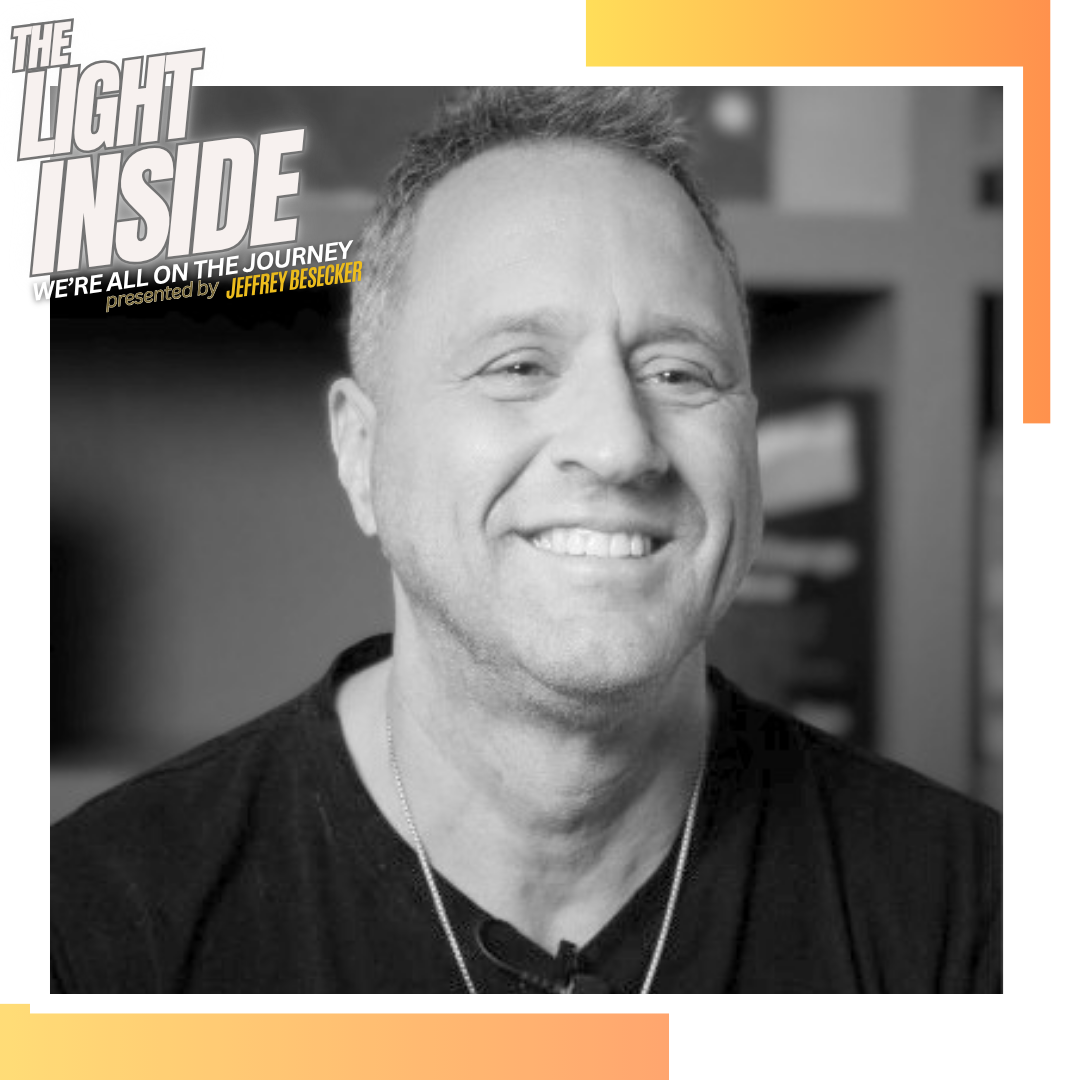
Founder / Author / Advocate
Steve is the founder of The Neuro’s Journey, a neuroscience-backed platform reframing trauma as a nervous system, pattern and healing as the restoration of regulation. After a 30-year career in finance, where I rose to executive leadership, I have turned my focus inward, uncovering how unresolved trauma had shaped my nervous system, behavior, and relationships.
Through disciplined inquiry, lived experience, and neuroscience-informed understanding, I’ve reframed healing not as self-improvement, but as regulation that restores presence, choice, and responsibility. Today, I write and speak about trauma, masculinity, leadership, and relational safety, focusing on what becomes possible when survival patterns are reinterated with grounded regulation.
