Moral Ambiguity: How Collapse Shapes Rupture and Repair
In therapeutic settings, clinicians frequently encounter moral ambiguity, which can profoundly affect the therapeutic relationship and the client's sense of agency. This complexity arises from the interplay of various factors, including the clinician's biases, power dynamics, and the societal context in which therapy occurs.


In this episode of The Light Inside, we delve into the complex and often challenging topic of moral ambiguity within the therapeutic relationship. Our guest, Simon Mont, brings his expertise as an organizational and conflict coach to explore how moral ambiguity can shape interactions between clinicians and clients, especially when collapse, shame, defensiveness, or self-sealing containment narrow the relational field.
We begin by discussing how moral ambiguity is not inherently problematic but can become a cue that organizes collapse, rupture, repair, and even re-traumatization under relational load. The conversation highlights the importance of metacognition, where the clinician's ability to observe the process while participating in it becomes crucial.
Simon and I explore the dynamics of power within the therapeutic setting, emphasizing the need for clinicians to hold the relational field with enough capacity to slow down the sequence of events that lead to protective responses. We discuss the role of pacing, sequencing, and titration in allowing repair to become reintegration.
A significant portion of our conversation focuses on the ethical considerations and the clinician's responsibility to maintain a balance between holding space for the client's agency and not imposing their own moral judgments. We touch upon the challenges of navigating societal and cultural contexts within therapy, and how clinicians can inadvertently replicate societal harms if they are not mindful of their own biases and power dynamics.
Throughout the episode, we also reflect on our own interaction, using it as a live example of how misunderstandings and power dynamics can play out in real-time. This meta-conversation serves to illustrate the very principles we discuss, providing listeners with a practical understanding of the concepts.
In summary, this episode offers a deep dive into the nuanced and often ambiguous terrain of therapeutic ethics, power dynamics, and the clinician's role in fostering a space where clients can explore their consciousness and agency. We hope this conversation provides valuable insights for clinicians and anyone interested in the therapeutic process.
Timestamps
[00:01:10] Moral ambiguity in therapy.
[00:06:19] Power dynamics in therapy.
[00:10:30] Client agency in therapeutic relationships.
[00:13:06] Agency and mutuality in therapy.
[00:17:27] Moral ambiguity and duality.
[00:19:54] Moral ambiguity causal cue stack.
[00:25:30] Therapeutic space and moral ambiguity.
[00:32:19] Moral choices in clinical practice.
[00:34:27] Moral ambiguity in coaching.
[00:39:18] Gaps in communication and understanding.
[00:44:58] Power dynamics in communication.
[00:47:07] Power dynamics in healing relationships.
[00:51:40] Agency and moral frameworks.
[00:56:17] Power dynamics in conversation.
[01:01:12-01:01:23] Node-level metacognition in relationships.
[01:02:06] Failure of sequencing in care.
Coachable Inquiry: What happens when interpretation starts moving faster than contact?Many communication breakdowns do not begin with bad intent. They begin when cue-driven appraisal, embodied state, and prior relational learning start shaping meaning faster than the relationship can hold context, pacing, and mutual contact.
Read the blog, then share the part that challenged your assumptions most—we’d value hearing what it helped you notice in your own communication patterns.
"The Introspection Illusion: Cue-Driven Appraisal and the Early Loss of Contact"
Credits
- Host: Jeffrey Besecker
- Guest: Simon Mont
- Executive Program Director: Anna Getz
- Production Team: Aloft Media Group
- Music: Courtesy of Aloft Media Group
Connect with host Jeffrey Besecker on LinkedIn.
Moral Ambiguity: How Collapse Shapes Rupture and Repair
Jefrey Besecker:
This is The Light Inside. I'm Jeffrey Bieseck. Moral Ambiguity. Research tells us it's often where the therapeutic field becomes most revealing. Not because ambiguity is the problem, but because under enough relational load, ambiguity can become the cue that organizes collapse, rupture, repair, and even re-traumatization. The client feels misread. The clinician feels urgency to clarify. The room tightens and meaning compresses. and before either person can fully track what is happening, the interaction begins to organize around protection rather than contact. In those moments, the work is not simply to name what happened, correct the rupture, or restore regulation. The deeper clinical task is to hold the relational field with enough capacity to slow the sequence down. Cue, appraisal, state shift, protective response, interpersonal impact, and reinforcement. That is where titration, pacing, and sequencing matter. Today we're exploring how moral ambiguity shows up inside the therapeutic relationship, especially when collapse, shame, defensiveness, or self-sealing containment begin to narrow the field. In a subtle way, we look at the role of metacognition, the clinician's ability to observe the process while participating in it. Tune in to discover the role moral ambiguity plays when it enters the relational field, and why the key question is not who is right, but what cue, state, and meaning-making sequence is organizing the rupture. Find out how pacing and sequencing allows repair to become reintegration when we return to The Light Inside. When it comes to mobile service providers, many of the big-name networks leave a bad taste in your mouth, with their high-rate plans, extra fees, and hidden costs or expenses. Mint Mobile is a new flavor of mobile network service, sharing all the same reliable features of the big-name brands, yet at a fraction of the cost. I recently made the change to Mint Mobile, and I can't believe the monthly savings, allowing me to put more money in my pocket for all of the things which truly light me up inside. Making the switch to Mint Mobile is easy. Hosted on the T-Mobile 5G network, Mint gives you premium wireless service on the nation's largest 5G network with bulk savings on flexible plan options. Mint offers three, six, and 12-month plans, and the more months you buy, the more you save. Plus, you can keep your current number or change to a new one if you like, and all of your contacts, apps, and photos will seamlessly and effortlessly follow you to your new low-cost Mint provider. Did I mention the best part? You keep more money in your pocket. And with Mint's referral plan, you can rescue more friends from big wireless bills while earning up to $90 for each referral. Sometimes the most important shift in the room is not what is said, but what happens when uncertainty enters, and someone reaches for certainty faster than the relationship can hold. In this opening segment, we begin with that tension. When moral ambiguity touches identity and a client or clinician starts moving away from relational contact and toward protection, certainty, or self-sealing containment. Joining us is Organizational and Conflict Coach Simon Mont, a clinician and relational thinker whose work explores moral injury, ambiguity, and therapeutic rupture as we examine how these protections shape what can be felt, named, and repaired within the field. Because when uncertainty narrows capacity, interpretation can begin to move ahead of discernment. And as this conversation gently illustrates, What follows often depends on whether the room can hold enough pacing, humility, and relational contact before meaning is shaped too quickly into intervention. Hey, Simon, how are you?
Simon Mont: I'm good. How are you, Jeffrey?
Jefrey Besecker: Fantastic. So I am interested to talk with you, and if I'm aligning correctly with our intention, on having a discussion on clinical therapeutic ethics and specifically how mental health practitioners might effectively hold the relational field with consent and attuned care. Does that sound aligned?
Simon Mont: That's just not what I was expecting to talk about.
Jefrey Besecker: Okay.
Simon Mont: I think when I wrote in, I was talking about a particular pattern that I've seen a lot in my work. But the last time that I had a, was kind of like really in deep conversation with somebody in the same space we talked about was all of the puzzles of doing one-on-one therapy inside of our social context. Um, and all of the different power dynamics that come up inside the therapy room, as well as like, you know, what happens when you have someone who comes into the therapy room and they're processing something about society, the place that society is at, whether that's an identity dynamic, they're wrestling with their race or their gender, or they're depressed. And you ask them, you know, why are they depressed? Like you unpack this depression, but like, if right. Like that, just to, just to get the example. All right. So if I'm suffering from depression and the story that I tell you as a practitioner about my mindset, um, has to do with, I feel like I'm constantly on a grind and I can't, I don't ever have time for myself. I'm exhausted. I feel like I'm failing because I don't have the money to take care of my family. And it's really hard to get a job. And as a man, I feel like I'm supposed to be the provider for my family and I'm, and I'm falling short. Right. All of those are mental stories, but they all intersect with societal structures. Right. Why do I believe that? So how do we unpack, how do we relate to that as practitioners? I think that was the last time that I was in it. So that's a fun conversation.
Jefrey Besecker: So how would that differ from a clinical perspective versus self becomes a power dynamic? Where does clinical humility come in there with depth of knowledge on the core material? Where does our own material start to blur that line to begin with? It starts with humility that's going back to relational field in a clinical setting. Our goal is to recognize when our power dynamics and data play into that becomes one thing. Do we necessarily weaponize it? Going back to the core question, care-based values, we have the core clinical assumption that our goal is benign and we're not weaponizing it yet. Inadvertently, that power dynamic may enter based on your own unresolved data. So that comes into play, becomes a core gap.
Simon Mont: Yeah, totally. I think like emphasizing choice and awareness is a really nice to me space to focus on as a practitioner. Because let's say I'm fixated on the story that I am failing as a man because I can't provide. And every time you're as my practitioner, you watch me continuously repeat that story. Well, there's a whole wide set of choices that I can make as a person who's holding that story about how to relate to the story, right? I can believe that it is true and I am truly a failure. I can believe that the story is a function of my neurochemical state and I can try to intervene on a neurochemical way. I can believe that the story is a product of a response pattern that I developed for my family of origin. I can believe that it is an ancestral thing. I can believe that it is a societal story imposed on me by patriarchy. There's all these different choices that I can make about how to relate. Now, you as a practitioner, the more aware you are of all of those choices, the more you can reflect to me the choice that I am making.
Jefrey Besecker: But if it's not about the choice itself, And say more. As a practitioner, our goal from a clinically attuned model, hopefully, and this is where some of that gap starts to enter, understanding what the core causal cue stacks are. No one dynamic is defining that, whether that be your narrative, your assumptive meaning, whether that means your arousal state as a hopefully expanding practitioner, you're able to begin discerning that and picking those models apart, not moving instantly to self-sealing containment on your own regard. Well, this is my assumptive reasoning, moving too quick to a closed model of why the client is engaging in any of that is where that dynamic begins. Moral ambiguity coupled with self-sealing containment. That is the core gap if you want my clinical discernment and where our community has kind of targeted being a focus of that.
Simon Mont: Say more about that moral ambiguity.
Jefrey Besecker: Moral ambiguity. Let me go down here and I've got a setup. Let's look at the self-sealing containment first as an organizational mechanism. You've got a lot of different structures, a lot of different patterns going on that functions to preserve internal coherence. That's your felt sense of what is coherent, what is doable, what's manageable. And underlying identity associations or structures are going to come into play there. That's where that narrative starts to come in. That's where your self-beliefs start to come in. That is where your learned history starts to also interject at the identity structure level there under certain sequencing and certain pacing. There again, it's about understanding what's happening in the moment as the access point versus a flattened, stigmatized, or generalized pathology of that itself, an assumptive framework. What's going on here in the moment may not be the entry point or may not be the repetitive pattern that's happening with the client underneath. So it's understanding that deeper discernment of what the core causal cue stacks are. These are indicators or on-ramps pointing toward a speculative reasoning as the clinician first and foremost. The instant I overstep that becomes my need for certainty, my struggle with ambiguity. That might create a rupture repair cycle where now my dad is influencing the client and shutting them down rather than them expressing where they are in that moment first, how they're relating to it, and how they start to unfold.
Simon Mont: Totally. So, what's the core goal as a practitioner for you?
Jefrey Besecker: So that's a long-range goal. First, what are the healthy boundaries for the client? What is their consented model of outcome? Because my goal starts to automatically intrude on that. I have to hold that with clinical nuance in that relational field, in that care field.
SPEAKER_03: Yeah.
Jefrey Besecker: So my goal isn't you must grow, you must do this, this is your healthy outcome. My goal is to hold that space and allow that client to reconnect with agency. That brings us back to that shared power dynamic of you have a felt sense of agency, I have a felt sense of agency. If your felt sense of agency is flagging or being challenged. That's a very loose dynamic right here in a moment how I'm defining that. What brings you back to that felt sense of agency, volition, efficacy, the ability for you to act? Are you mobilized with that data where you feel like you can act or does that become constricting and shut down? There's the power dynamic in your own internalization of it. Have you compressed and constricted that field? just so you don't feel like you can hold that data. Where's your capacity and range? How does load and stress affect that capacity and range? Moves us back to the core biological data of it. Where are you comfortable or where are you able to be present with capacity and range? And what creates that generative adaptive range where you can reestablish that contact What are some of the core underlying sub stacks and cues that are starting to trigger that dynamic? Is it an internalized learn environmental behavior? Is it a epigenetic pattern you've accumulated? Is it a core identity structure that you're interacting with at some point? Starting to learn what those stacks are and how they start to create that deck of cards you're playing life from. That's the best way I've kind of learned to understand and communicate. to others is you're holding a whole deck of cards what those interactions might mean in front of you at any given time you're pulling those cards sometimes you're blindly pulling those cards out and laying that down as your kind of play on life quote-unquote trying to metaphorize that and bring it into kind of a conceptualization that some people can grasp a little easier So that's flattening a whole lot right there in the conversation. I think we can go really epistemically broad with that. I can get into a great deal of nuance from my perspective. So we're here to share your perspective, tossing that ball back to you.
Simon Mont: Yeah. Well, I think the word that I heard really at the core of that is agency.
Jefrey Besecker: Yeah. And shared agency, there has to be mutuality in that. There again, as soon as we slip into those dynamics of mutuality, we set up conflict a lot of times.
Simon Mont: Yeah. And the goal of the, what I kind of heard there is that as a clinician, one of the primary goals and service of the client is to help them access a deeper level of agency.
Jefrey Besecker: If that's the client's goal. Again, if that's the client's goal. Where do we blur that line again becomes interpretive intrusion. That power struggle can start to step in there because again, your will, your intent, your values, your goal starts to intrude upon that. So that's some of that clinical nuance where, yes, I have a benign intention that I hope for your best outcome. I hope for your generative adaptation and growth, but where does that intrusion start to happen is where our own data starts to step in.
Simon Mont: I think this is a great example, right? Of what happens now when we put that framework, that clinical framework in the context of society, which is what happens when I come to you as a, you're a practitioner and I show up. and say, you know what, I really want to learn how to better manipulate my wife to do what I want and to lie about my affairs. And I want to figure out what's happening for me is every time my wife calls me out on my lies and my affairs, I get really dysregulated and I kind of get angry. I want to be able to be a more stone cold liar and manipulator. Can you help me? Now, that's not to me a value neutral goal. So how do you think about that? If I come to you and that's my goal set, how would you relate to me in that?
Jefrey Besecker: First, I have to hold some degree of moral ambiguity there. Again, the natural urge is going to be a judgment dictation that we inherently have to hold effective forecasting as part of that judgment, where that person is, what their relational contact is. If you believe we're inherently absolved of any kind of judgment, that's a conflicting notion itself. If we go more logical on it, we inherently have to have evaluations, judgment, discernment comes in there, rather than going toward a punitive judgment, a punitive moral value on that. Which I'm going to automatically, a part of me will do. Why does a part of me need that becomes a part of my data. It's much deeper than just a simple black and white moral right or wrong. There's inherently a part of me that's meeting the same parts of the needs in that person. So for me, if I'm approaching that client, I know there is a deeper value. Validating their need is going to be my central goal in that. What is your underlying need in holding these experiences with the wife? And where might there be a gap that creates that conflict is going to be my entry point.
Simon Mont: So you're going to go for what is the need? Why are you going to do that?
Jefrey Besecker: Because that's going to tend to be the core value that's operating most of our structures. We're going on needs, whether we're consciously aware of them, we're meeting our internalized needs.
Simon Mont: And what if I say, I don't want to talk about the need. I want to talk. Are you talking about the need just so that I can get better at manipulating my wife or not? It feels like you're trying to change me.
Jefrey Besecker: Yeah. And that's a whole nother drawn out thing.
Simon Mont: But I think the place that I'm resisting, the place that I'm trying to reflect back actually, is actually the moral stance that moral ambiguity itself is. So when I step in, right, when I step in and I relate to anyone in a clinical setting or a non-clinical setting from a like hyper non-dual state, There is no good or bad. There is no right and wrong. All of my sense of what is right and wrong or good and bad is a product of my own data or my own material. So who am I to impose that on you? That itself is a very particular moral stance.
Jefrey Besecker: Now we're going really conceptually broad there. Inherently duality is going to exist in everything we do and that itself creates a humanistic conflict. Do we get caught up in that in this conversation or do we find a more structured way to organize that?
Simon Mont: What do you mean there?
Jefrey Besecker: So we're going down a path now where we're starting to consider duality and there's a contradiction in that.
SPEAKER_03: Yeah.
Jefrey Besecker: To say we somehow absolve ourselves of duality is somewhat of a dissonanced, flattened, diffused view. There's a moral framework, culturally, of right or wrong that has to come into play to some degree, or else we slip into chaos entropy. If we don't have some kind of defining rule of imperative, you know, it's imperative you don't kill your neighbor, it's imperative you should hold mutuality with others in consideration, so we don't slip into outright chaos. There's a value there where duality serves another purpose. So I don't know that it totally serves our community to get right to the point and say that. Let's dig all through that.
Simon Mont: I actually think that's exactly what serves the therapeutic community because the therapeutic and the coaching community, right? All of that, because sometimes we believe that what we're doing is either value neutral or good. A lot of people are clinicians because they want to
Jefrey Besecker: That's a flattened assumption in itself. How nuanced do you want to go with that? Where does that become diffused? Where does that become either ontologically flattened, teleologically flattened, epistemically flattened?
Simon Mont: I'm very confused about the conversation we're having and what the intention is, right?
Jefrey Besecker: Yeah, that's I'm trying to establish where we're going. Again, that's where that ambiguity starts to come in because we're interjecting more and more ambiguity rather than defining a structure, rather than pinpointing back to a recognizable framework. If I take you as a clinician down this path or if I take you as a client down this path of ambiguity, how shut down do you become? I'm willing to hold that much nuance. I have that much ability to say I'm going to hold that capacity for nuance, yet you're starting to shut down to it.
Simon Mont: Shut down to nuance? Is that what you think is happening? It could be. It's one possible path. Yeah, you definitely just made a claim about me.
Jefrey Besecker: I did, see? That's what happens. I did the point to make the point.
Simon Mont: No, but what's the goal of our conversation?
Jefrey Besecker: The goal is to understand what the underlying causal cue stacks are that might trigger these behaviors. When you go back to looking at, if we're to say, then I connect with people in a group, this was what the suggested primary behavior was.
Simon Mont: Could you slow down for a second so I can track you? So you said under understand the underlying causal cue stacks of what?
Jefrey Besecker: Of the primary behavior. So the primary behavior here is going to be moral ambiguity.
Simon Mont: OK. Oh, so.
Jefrey Besecker: Understand the primary assertion in what the clinical example was, when I connect with people in a group.
Simon Mont: Oh, I just let me let me. I want to I want to make sure we're on the same page, I'm listening. So we, you want to explore the causal cue stack of moral ambiguity of what, how, of why someone might understand that to be.
Jefrey Besecker: Let's spin this around. I'm going to throw it back to you. If our listeners are to remember one thing as an applicable clinical practice, that's ethically grounded and takeaway, what would you want that takeaway to be from this?
Simon Mont: I think we should end the conversation. I'm trying to understand what you want to talk about.
Jefrey Besecker: So why are you wanting to exit the conversation now? Is that a response to get out quick or do you want to hold that ambiguity together?
Simon Mont: Um, the reason is because I'm trying to establish a shared reality with you and a shared center of focus. I'm trying to do that by hearing what you have to say, reflecting that back to establish a center. Um, but you're, um, interrupting me each time, which makes me confused about the intention. And the way the conversation's proceeding without a clear intention or a clear goal.
Jefrey Besecker: What is your intention for the audience? Let's establish that. Let's reel it back here before we get down the path of describing it and explaining it.
Simon Mont: My understanding was that we were going to center a topic and then explore that topic together with a slight, explore it mutually with a slight tilt toward evoking my contribution and perspective so that we could be of service to clinicians. And I don't understand in this particular moment, what that topic is. The best that I've understood it is that you said the primary causal cue stack for the behavior of a moral ambiguity. That's what I understand right now.
Jefrey Besecker: So basically in my own words, immoral ambiguity or just moral ambiguity in general.
Simon Mont: Well, I'm trying to understand what you were doing is what I'm trying to do right now is that you are, you brought the focus to the causal cue stack for moral ambiguity, which in my understanding is, is what causes someone to hold a stance of more of moral ambiguity. That's my understanding of what you want us to do, right? Is that correct or not?
Jefrey Besecker: Moral ambiguity. That's that uncertainty. Would you like my definition of moral ambiguity in there? Yeah, so what… Okay, so looking at specifics regarding clinical nuance, care language paired with unclear specificity of what we're engaging in right now, it's unclear where we're going with this. So that's moral ambiguity because now we're forming value judgments based on that. I disagree. Okay.
Simon Mont: I actually think that what's happening is that I'm seeing in your facial expressions and the way that blood is moving to your face and the level of interruption. I'm actually thinking that you're bringing a lot of material into this and projecting it onto me in a way that's unaccountable. Like, honestly, kind of, it's very frustrating and confusing over here, especially when you combine that with the very particular vocabulary you're using. It's making me just like feel as if there isn't a mutual conversation occurring and I don't have like a cosmic moral judgment about that. I don't necessarily think it's good or bad or anything like that on a real way. And as an individual, I have to make a choice about how I spend my time and what I do. My goals for the day. and to be engaged in this quality of conversation where it's hard to establish what we're talking about and I feel interrupted, it makes me confused about what we're doing. And it really deeply makes me confused about your intentions and your goals in the conversation. That's really confusing to me. And what I hear, yeah, so I would love, I'm happy to continue, you know, if we have a reason.
Jefrey Besecker: So thank you, thank you for honestly, vulnerably sharing that with me, holding that relational space. Yeah. Thank you for pointing out where that intrusion starts to happen, where that data does start to come in. Thank you. I'm holding that now honoring my accountability in it, which honors again, that moral ambiguity. which recenters us and I offer my heartfelt apologies if that has become confusing and if that has contributed to that ambiguity. Thank you. Recognizing my material and my involvement in that space. That right there is my goal. That is my intention to recognize when that gap occurs in the therapeutic space.
Simon Mont: Yeah, this is beautiful. So, I appreciate that. So, what I'm feeling is, and that is like this, right? That the thing that we're exploring is when each of our different materials comes together. And I think what I'm trying to point to is something that I think is pretty nuanced in that space. Which is that the choice, the two of us right now, if we were to make a choice that our primary goal is to hold a, we'll call it like neutral space without sharp moral judgments, and with an incredibly close tracking of when one of our subjective materials collapses reality into something smaller. And that our goal and that the reason that we were doing this together was so that one person in the client role could have the space to explore their consciousness and the state of consciousness in a way that was primarily directed by their own internal impulses, not interfered with by an external clinician's material or impulse. If that is the context that we were doing, right? that that choice itself to do that is a choice that we're making while we're embedded inside of a broader societal and moral universe. So we make the choice to enter that space in that larger context. And that that awareness I think is really important for us as clinicians. And just as one, like one really overly simplified example of why it's important is that it encourages us often, not always, but often to understand the primary unit of material as either an individual self or a dyad, where I'm me, I am the client going through my journey, and you are the clinician being present for that. And that framework of the individual process That itself is only, it's only one way we can understand it. We could understand me not primarily as an individual, but as a representation of a lineage, as an embodiment of a culture. There's all these other things. And that the choice to understand me as a primarily as an individual, that's a historically embedded choice, right? People do that more in some societies and less in some societies, right? So even doing it, we're inside of a culture. And then if we are still in that framework of like, let me follow my own impulses and all these things, right? You, I'll just speak for myself, me as a clinician, when I'm in this state, right? The super intersubjective, morally ambiguous consciousness exploration state, I try to radically release my judgments of good and bad to hear other things, to not collapse. That's not who I am. That's not how I actually operate in life. When I actually operate in life, when my friend tells me that they're lying and abusing, actually this recently happens. I heard a story. I heard that one of my friends actually might have been engaging in sexually predatory behavior. Now, I'm not morally neutral about it. Right. When I spoke with him about this, I was neutral. I didn't want to judge or blame him or collapse things, but I was honestly like, yo, if you're doing this, my goal in relating to you is to bring awareness to it because I think it's not a good thing. And I believe in my heart and my soul that you should be doing something different. That's. Right? So I think that most of us actually have these moral lines. And I think it's a really complex moment as a clinician when you're faced with being taught to be in this neutral space, but all of a sudden something societal and moral enters. And at some point, I even think that clinical ethics draws lines. Clinical ethics says, if somebody tells you that they plan on murdering someone, We're not going to hold moral ambiguity. That's across a line. And I think that space is really fascinating for us to be aware of. And that's what I was trying to bring us into.
Jefrey Besecker: Awesome. I'm going to hold that for a while. And what takeaway, again, this is allowing you to have the space for your narrative. Would you, as the central point, like to make with it?
Simon Mont: Yeah.
Simon Mont: that as a clinician, we are making moral choices constantly. Even the attempt to be neutral is a moral choice. And we're doing that inside of a societal arc. and that the very notion of being a one-on-one clinician is embedded in a history that imports assumptions of particular societies and cultures and epistemologies itself.
Jefrey Besecker: Yes.
Simon Mont: I agree. And that one key addition to that that metaphysical epistemological framework is to say, zoom out of the clinical framework for a second. watch you as a clinician and you as the, and then the practitioner and the client in that, see that from outside and then wonder how would other communities and epistemologies and moral frameworks view that itself, view the choice you're making there. And by seeing it through those different perspectives, you actually get, we get more, more perspective and we get more agency ourselves as practitioners. We get more availability of choice because we are more aware of the reflections of ourselves from our perspectives. And that is super important nowadays, especially when we have a moment significantly in coaching and like relatedly in therapy in clinical settings, where the moral ambiguity can actually let what I would consider like violent patterns to go unchecked, right? Violent, we don't need to make a moral judgment, but the type of pattern that causes one body to inflict, to non-consensually inflict what is considered harm on another body. That thing, which I'm personally not a fan of, Right. But we have this, and I think the, like the best example of this pattern you can see in kind of the, um, in the like CEO transformation, ayahuasca circle, right. They go, they have this experience, they feel a different level of agency and consciousness. And what do they do? Well, they use that to just more effectively run a company built on. children mining, mining gems, like child slaves mining gems, but they can justify it. And when that person shows up to you as a clinician, are you gonna go totally morally ambiguous? Or are you gonna kind of think, ooh, this doesn't seem, this doesn't seem like the highest expression of this person's soul or humanity. I'm gonna hold that humbly. It doesn't seem, I am going to kind of trust my know here a little bit and investigate. And I think that's an important part.
Jefrey Besecker: Working off of that, I think that reflects back to that idea of benign, malignant, non-maneuverable and spit that out today, non-maneuverable. That's a mouthful. That's probably why we come up with a lot of other words for it. That's my justification. You know, where do we draw that line again? Again, realizing for me myself, if I'm speaking from my perspective now, if I might share that with you.
Simon Mont: Yeah, please, please.
Jefrey Besecker: Modeling that consent and that non-violent communication, holding that bigger understanding of violence, where does harm start to come in for me now? So if I may share that.
Simon Mont: Yeah, please.
Jefrey Besecker: And I think that instant and that pause right there, if you were to look at that, how do you feel starts to model that reflective?
Simon Mont: Sorry, I heard a question in there, but I didn't totally comprehend it.
Jefrey Besecker: Again, I'm slipping into my own ambiguity here and how I'm presenting it. So thank you for reflecting that back to me and offering me that chance to clarify and hold that space with you.
Simon Mont: Yeah, thank you. It was fun.
Jefrey Besecker: Again, now, as I'm doing this, I'm consciously trying to hold that attunement and awareness of consent, regard, consent, regard, hopefully bringing that conflict back into a different domain and recognizing without having to go back into my rumination and pick apart the various parts that are interacting in that data, the various identity structures, the various learned cultural dynamics. Again, I'm trying to do it in a moment now.
SPEAKER_03: Yeah.
Jefrey Besecker: Bringing that intention aligned with you and hopefully holding that space together now
SPEAKER_03: Yeah.
Jefrey Besecker: Thank you for humbly reflecting that back and giving me that feedback. And even though there may have been activations and discomfort under that, even though I may have moved into dissonance from my own accord, being able to acknowledge that and seeing the smile return to your face now, because now I'm starting to move into clarity with you.
Simon Mont: Yeah. And for me, that's that's how I experienced that as well. And for me, I think the wall, like my experience of where we wobbled had to do with, I had to do with the intention, right. Had to do with, hang on, what exactly are we, what exactly are we, are we, are we doing? And then my, my understanding of kind of like where we went in the conversation is because there wasn't like totally shared intention about how we were attuning to which parts of each other. And then what were we. placing our collective attention on. Right? Cause I was like, oh, we're going to place our collective attention on something. And then there was this whole moment where it was like, what exactly are we placing our collective attention on? And then it felt like there was just like, like a micro miscommunications about that over and over and then micro miscommunications about the intention. And then at some point we were both like,
Simon Mont: And that's, and then, yeah, and then we had to kind of.
Jefrey Besecker: I would throw the ball back to you. I'm going to throw the ball back to you if you're cool with that now. Yeah, yeah, yeah. So from your perception, if you were to identify or at least just hold space for maybe two gaps that occurred there, either through how I was orienting or how you were holding that space and how you experienced it, what comes up for you?
Simon Mont: Oh.
Simon Mont: I think there was. Yeah, I'm really curious about your answer to that question too. Okay. Because the gaps, the gaps that I noticed. were both things that I'm going to attribute to your behavior, but I think that's very natural for me to contribute the gaps, for me to see them over there. So I'm really curious about what you thought.
Jefrey Besecker: I think that's probably an early on ramp for all of us. First and foremost, we're filtering a lot of times through that internalized perspective. Neither good nor bad, that's how we orient. You talked about the tracking. What are we tracking? What are we consciously monitoring? What's unconsciously happening? Where does that data point enter? That's me, if I might have the permission to bounce that back to you, that reflecting again. What are we tracking? What are we monitoring? Where does that data enter? My data entered, then where does that interpretive intrusion start to connect from either direction and where does that cause that dissonance?
Simon Mont: Yeah. What I think I noticed was that as we were finding the like center of our conversation, I was trying to point to a particular area of consciousness, set of patterns, set of dynamics. And the language that I was using to point to it didn't establish the same meaning in your consciousness.
Jefrey Besecker: Yes. Different health experiences. Right.
Simon Mont: And then, well, yeah. And then it was like a different cognitive understanding and then a different, and then layered on that a different emotional understanding. Yes. Right. Cause I felt like we were also emotionally reacting to what the other ones thought they were pointing to. So that, and then that to me, I thought I was just kind of like working with and we're doing it. We're going to find it. And then there was a moment when. I employed a very particular strategy to try to establish shared reality, which was, you had said something, and I tried to say, oh, so we're talking about the following, and I was trying to reflect it back. Is this what we're talking about? And then when that strategy wasn't successful for me, that's when I'd use a different strategy, which is like, I think I think we're totally off the rails right now. And then that brought us back. And then I noticed, for me, inside my own being, I was holding an inquiry of how much I was going to devote to finding the repair. We can. And again, like this moment is taking place in the context of my entire life. So how much am I going to devote right now? And then it's like, and I took a second, I was like, am I running away? I don't think I'm running away. I'm just like, at some point. This isn't the place to invest." And I think that's another. So, that was kind of the inquiry.
Jefrey Besecker: Now, Mer, back to me. And again, I intruded on the interpretation there and I made a conjecture about what I believed I was observing. How did that land for you? I moved into it so quick, my manager part was ahead, that capacity holding the manager part was pushing ahead. I'm trying to find this goal. We have an established goal. I've got a background goal from a group where we're very involved with where the community would like to question, and that wasn't established. We didn't have our external ground established going in yet. There was a difference there. Yet then also there was exile parts coming in, there were firefighter parts coming in. The firefighter part tends to be the part that gets the red face. It's coupled with those other parts. I started to move into a shame narrative in the back of my mind, just out of my natural data, out of where my material is. I'm able to hold that. The goal is not to admonish it and continue shaming it, rid myself of it. It's just holding when it's in vivio and present. So thank you again for honoring that. And when we move into that capacity and that coherence, I feel like that itself for me doesn't have to be my collapse shutdown point. If I move into collapse, again, humbly recognizing that in myself and saying, you're right, I did just collapse. And if I'm truly working with that data, I'm not moving into withdrawal. So I'm able to recognize that now and move back toward tracking and orienting, finding the pacing and sequence with you.
Simon Mont: Yeah. And I feel like it's fun because like now we have like a nice little meta. We have like this meta moment to talk about some of the dynamic that we started with, which is like power, which is basically what happened for me was I was like, there's a power struggle occurring quickly. Right. On a, on a, on a, on like a really more present neutral vocabulary. I use that first. Right. And then I'll go into my own. material in the way that you modeled, right? So in the neutral sense, it felt like, I'll call it like a competition between paradigms, right? So you had a way of making sense and a way of communicating how you made that sense. Then I was trying to bring something from a different paradigm And then I was faced with this moment where it didn't seep in. I didn't get you inside my paradigm with me. Then in a clinical setting, we do that to each other. Where do we set the language aside? And that is such a huge moment because in this moment, I felt very low risk. You know, I didn't, I fell very low risk, very low threat. I'm just like, oh, I'm like mildly activated, whatever. But if I'm coming to you in a deep state of unknowingness in myself, as I'm investigating new levels of how I make sense of the world, and I bring that to you as a clinician, and your response is to impose any paradigm, all of a sudden we've established a really particular power dynamic. I'm now broken from my own sense-making process and I'm in the context of yours. And I wanna give an example of a time when I confronted this in a way that I thought was not particularly benign. So I was a part of a community, a kind of a mixture of therapists and healers of different types and a couple of leaders. And for simplicity's sake, we'll just say that they centered IFS, Internal Family Systems, as a core sense-making framework. And at one point, I went to the leader of this and I said, hey, my background is in community organizing and justice works, like social system stuff. And from my perspective, one of the ways that you're orienting us right now is actually replicating a certain type of harm, societal harm. And I wanna talk about that. And that person said, oh no, no, no. This is just your little part speaking, right? She said, no, I'm only going to engage with you as if in my paradigm where your little one is having a tantrum. And it created this very challenging moment for me because there's a power dynamic. I don't want to run away. And there's a way in which she was right. I was simultaneously activated and projecting my mother onto her. and running like a savior, rescuer script inside myself to justify my own self-worth and to subconsciously attack her power and establish my own. That is true. And she was replicating a race and class-based societal pattern that was going unnamed. Those things were happening simultaneously. Now, because she had structural power in the relationship as the leader of the community, in the same way a clinician has structural power because they're the clinician. And because part of why I'm relating to her is her ability to reflect back to me things I didn't know about myself. So I want to take that seriously. It's a tremendous wielding of power. And what happened here was that in a tiny minor way. But I think that that moment is really important, especially because of the limits of all of our clinical perspectives and the limits of the clinical perspective itself, there's this power of the language. I think that basically what happened with us was like, there was a miscommunication, but because our structural power was pretty similar, you're having a podcast, I'm a guest on a podcast, we're talking, there's very little at stake here, right? And I felt I've had enough practice inside of that dynamic that I could feel my little parts come up, ah, frustration, fuck this, whatever, right? I could feel like, no, no, let's try it differently. And because I had enough competence in the moment to try to reflect it in a way that made it accessible for you to notice it. And on the flip side, you had the shared value system and competence to notice when I was doing it, then we were able to repair. And what we ended up with was a different conversation. I think that's really important for clinicians. And I think like this as somebody like most of my work is in organizational settings and in organizational settings, people wield sense-making frameworks with a tremendous amount of power. Right. It could be IFS system, it just reflected in that it could be, you know, ancestral trauma that all that is is your trauma speaking, it could be social justice language that's just racism, right, whatever it is, we are when we're rigid with it. What we're doing is we're enforcing power on someone. And usually when we're enforcing that type of power, we absolve ourselves of responsibility because we think we are healers. We think that if I only enforced my IFS system on you, then you would be able to transform and heal, which is wild. It's wild. It's really wild. And also like, ironically, sometimes it's accurate, right? Sometimes if you just got me to see my small part, I would have a different awareness and it would help. But that all of that, those choices that we're making about what paradigm to use and what way and when to push, when to identify something as resistance and not to me is embedded inside of an implicit moral framework, which is what is the good. And I actually heard us both agree a lot about what the good was, which is to me, the good is agency, is deep and profound agency and choicefulness. And that what we're doing is we are trying, and because agency is a function of awareness, I can't be agentive in a domain in which I'm not aware. I'm trying to, as a practitioner, broaden the awareness and then invite choice and say, Hey, person who's here to tell me that they want better help manipulating their wife. I'm here to tell you back. Well, that's an interesting choice that you're making. You're choosing to do that. I wonder why you're making that choice because you could be making these other choices. Right. And that's like this tiny bit of material I provide. All I'm providing is like, Hey, these are seven choices. I know what you could make and you're making that one. Now I've invited your awareness to something and now we can talk about that. And then that punts the agency back to them. They can answer or they can walk away, right? And I can be incredibly revealed and basically say like, as you're forming your relationship with me, client, I wanna be honest with you that I'm gonna hold a paradigm where the fact that you're making this choice is actually a function of a deeper set of needs that's causing you to act in a way that is not acknowledging the dignity and humanity of someone else, that's the mirror that I'm going to hold. Now I've actually supported their choice and their agency because I'm being honest. I revealed just a little bit that then allows them to make a choice. So I'm not playing pretend with them. And I think that's also super dignified, especially for me in my role, which I do, I do this in the context of organizations and context of conflict. So nobody's coming to me in a hyper-neutral space. I have to say, look, at the end of this, I'm going to tell your boss if I think you engaged it rigorously or not. So here's what I think right now. How do you want to respond to that? That level of transparency actually about the material and the paradigm I actually think gives people increased agency about how they relate to us.
Jefrey Besecker: I think that is such a beautiful reflection to share. Thank you, first and foremost, for that. I want to honor that before we move forward any further.
Simon Mont: Yeah, thank you.
Jefrey Besecker: Again, establishing that context. Again, for holding me accountable when that power dynamic started to slip into a one-up, one-down from my framing. was again that collapse underlying that was an unconscious coercive control was trying to control the narrative in some regards. I was trying to again like you said tug and guide where that focus was going rather than tracking and attuning. Yeah. Thank you for pointing it out, because I think when we start to move into some of those more healing models, we can start to recognize that feedback and hold a greater capacity for it and say, thank you, because I know we do have a common shared goal. Even though we're not fully attuned and aligned with that common and shared goal, we came in with that. Yeah. We created a shared value in the outline structure. Where the dynamic starts to stray then is again, just rather than wrestling with the struggle for the power, at some point we surrender that power dynamic and say, let's move along toward that mutuality.
Simon Mont: Totally. And I think this has been really fun because on one level, right, what happened was we were both struggling for power.
Jefrey Besecker: Yes.
Simon Mont: Right. And I had entered with the assumption that because of the context of podcast, whatever, right, that I was going to have a little more power, right, to set and steer and we're going to respond, right? And then my confusion about context was like, oh, that's not happening. Okay, what is happening? Right? So I think that that was really interesting. And then now we're in an experience, right, where we've shifted the power a little, like significantly right now, I'm expressing a ton of power of sensemaking and where the conversation is going and all that. And that right from the, like the product standpoint, right. And now we get this conversation, which is useful in some other way and not better or worse. This is conversation, something else. That's what it is.
Jefrey Besecker: And it just illustrated it. And we demonstrated those dynamics. We showed the pacing. We showed where some of the gaps come in. We kind of ditch whose language is the right language. And again, moving toward that mutuality and that space.
Simon Mont: And I think this like from the clinical perspective too, your reaction created a context for repatterning and growth and newness in my being, right? Because whatever parts of me projected onto you that you were not going to do it. You're not going to play the game with me. Those all had got checked when you did. And the parts of me that were afraid, because I thought that if I expressed this thing, challenged the part of me that was afraid that if I challenged your power, I would be met with rejection or exclusion or whatever. All of those parts, I got to see them come up and then I got to watch that they were not attuned to the moment. And I got to, Oh, that's some of my material. Whereas if you had doubled down. on your paradigm, not only would we not have gotten to the cool place, you would have been telling me, you're right. Don't challenge power. And this like more fluid environment is really cool in a clinical setting, especially because so many of us have so much gunk around power. and experienced so many moments where the person who has more power, whether it's our parent, our boss, our teacher, the president, whatever, does not reflect on their use of power. We've experienced so many of those that in a clinical setting, being ready for that to happen and seeing it as this opportunity as opposed to a threat, super huge moment. And then the ability to do exactly what you did, which was like, I'm tracking my parts. and I'm aware of them enough that I can hold them, but I'm not now going to make the client hold them for me. I'm not going to collapse into the shame and make the client hold me because now we've wobbled. And now you're not playing your clinical role, which would be holding the space for that repatterning to happen. And now we're in this, what I consider a bit more of a rich embrace of the interplay of our materials. that creates this real world repatterning, which is slightly different than kind of what I think some clinicians go for, which is like absolute objectivity and neutrality. It's like, instead of going for that, you're like, you're noticing it and then you're playing.
Jefrey Besecker: Again, thank you for sharing that so beautifully. I don't know what more I can add at this point. I think we've got what we need. Do we have to come back and revisit anything? We modeled it. We showed it. We've demonstrated it. It was in Vivio, and that ultimately is what holding that space is truly about. It all becomes performative at some point. Where did I become overly performative in my actions I have to have agency for? I'm naming it for me because, again, it's holding my agency and recognizing where that mutuality is interacting and connecting.
Simon Mont: Yeah. Well, thanks so much for leaning in with me.
Jefrey Besecker: This has been fun. I'm so glad we got the chance. And again, if we don't sometimes step into that model of discomfort, that dissonance, that is where that data starts to keep rerouting itself. We keep moving back into the pattern. So I thank you for allowing that space and holding it so gracefully for me also, because it truly has been an enriching exchange where I feel we both move toward a mutual point of growth and adaptation.
Simon Mont: Amen.
Jefrey Besecker: This has been fun. I love when I can get into the juicy deep. And although on the surface, there's those little niggly parts that come up. I love when somebody will challenge that a little bit because I do understand inherently that that's where the deeper juice is, you know, that's where. Yeah, me too. Thanks for rocking with us. So it's been so fun, man. Thank you, Simon. All right.
Simon Mont: Thanks, Jeffrey.
Jefrey Besecker: Let's put a little earmark in here before I rush off. And before we rush off, where can I honor you and your program and send our guests to reach out? Where can they connect with you to learn more? Because I feel there is such a unique juice of looking at how we balance group dynamics with our own internal dynamics.
Simon Mont: Totally. I've got a website, harmonize.work. Like I said, most of the work that I do is in organizational settings. And when it's one-on-one work, it's in the context of an organization and occupies like a very interesting in-between zone between getting sometimes getting very, very close to the clinical space. where your accountability is fundamentally to an organization. And I think that is an interesting paradox, right? How do I interact with you as an individual in a way that is in integrity with the depth of unknowing and humility while also holding the good of an organizational body at the same time? And that's a microcosm of the thing I'm also inviting the listeners into, which is how do I do that with an individual while holding all of our communities that we're embedded in and our societies at the same time? It's a more complicated puzzle, but it's super fun.
Jefrey Besecker: Yes, there's so much more to look at and not collapse into. I've really enjoyed looking at your YouTube videos and the content you share there also. Thank you for putting that out there.
Simon Mont: Thank you, Jeffrey. I really appreciate you.
Jefrey Besecker: Take care. Bye. Bye-bye. What this conversation with Simon makes visible is that collapse rarely begins with bad intent. Very often, it begins when cue-driven interpretation starts moving faster than relational contact, and the field can no longer hold enough ambiguity, pacing, or reflection to keep us grounded in what is actually happening between two people. What matters is that node-level metacognition offers another pathway, not bypassing, not suppression, not sublimation, but the capacity to notice the cue, track the meaning being made, recognize the state shift, and catch the moment contact starts giving way to protection. That is part of what this rupture assignment illustrates so clearly. Sometimes the breakdown is not a failure of care, but a failure of sequencing. Certainty tightens, interpretation hardens, and what feels true begins to replace what is still unfolding between us. So, here's the reflection. When we can't slow the meaning-making process, we risk turning partial feeling into total explanation. In the moment you feel most certain about what the other person means, can you pause long enough to ask what cue you are organizing around, what state it's recruiting, and whether your conclusion is preserving contact or replacing it? If you found value and meaning in this episode, please share it with a friend or trusted colleague. To our community of therapeutic professionals, thank you for the rigor, care, and support you continue to bring to this work. We truly value and appreciate your continued input and support. This has been The Light Inside. I'm Jeffrey Bieseck.
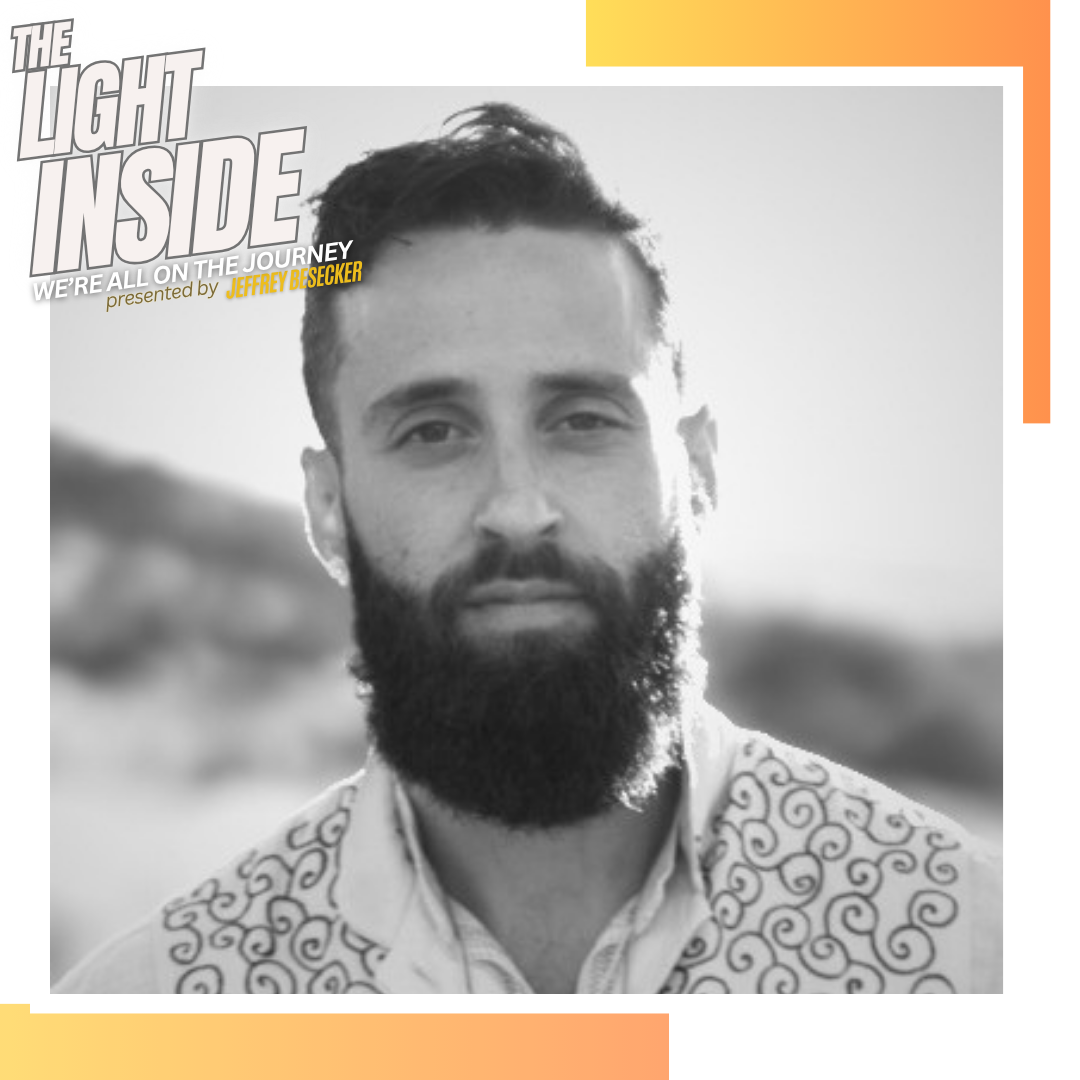
Conflict Coach
Growing up, my family played a lot of board games, which meant I was always learning systems of rules, accomplishing goals, and relating that intimately to my sense of familial connection. In a way, I’m still doing that, co-creating systems that blend rules, relationships, strategies and purpose. I feel blessed to be able to do that with inspiring people in service of our healing and liberation. I have been focused on collective liberation for as long as I can remember, though I didn’t always call it that.
It began as a deep sense of justice, fairness, and belonging largely informed by my Jewishness, growing up with a brother with a disability, and being raised by parents that made sure I understood my positionality in global systems. This fire for justice and integrity has been the primary guide for my life. It has led me on a journey of reflection, confrontation, healing, and action to shake loose the social conditioning I inherited and become an agent for political, economic, and spiritual liberation of all; including myself.
I bring a decade of experience as an alternative economies lawyer, facilitator, and organizer in a variety of communities. I’ve been a canvasser in DC, an organizer in Oakland, and a school teacher in South Arkansas. I’ve sat in circles at San Quentin Prison and Burning Man. I’ve been zip-tied in police vans, and in camouflage in hunting tree stands. I’ve held hands to sing and to block traffic. Nowadays I shuttle between Colorado and California, cross-pollinating the worlds of grassroots organizing, business, technology, and wea…